Pseudonyms, Pen Names, and Aliases for Artists
Choosing your artist name in the age of social media
Have you ever heard of Michelangelo Merisi, Donato di Niccolò di Betto Bardi, Dominikos Theotokòpulos, Moishe Shagal, or Marcus Rothkowitz?
You probably know them better as Caravaggio, Donatello, El Greco, Marc Chagall, and Mark Rothko.
Would these names change how you perceive their work?
Choosing to work under a pseudonym is not a trivial decision. An artist’s name is not just a label; it’s an identity marker, a marketing tool, and a searchable asset. Once you choose it, consistency becomes crucial. Changing names multiple times throughout your career can damage recognition, confuse collectors, and fragment your online presence.
In today’s art world, your name is also your brand to handle, your domain name, and often your first point of contact with curators and collectors.
Why Artists Choose to Work Under a Pseudonym
1. When Your Birth Name Works Against You
One of the most common reasons artists adopt a pseudonym is name confusion.
Ask yourself:
- Is your name very common?
- Is there another artist already using it?
- Does it belong to a well-known public figure in another field?
In the digital age, this matters enormously. If collectors can’t easily find you online, you effectively don’t exist to them.
Search engines, social platforms, and even AI tools rely heavily on clear, unique identifiers. A shared or overly complex name makes discoverability harder and weakens your professional presence.
At the same time, this doesn’t mean erasing your heritage. Simplifying, shortening, or adapting a name can improve accessibility without “whitewashing” identity.
2. Privacy, Safety, and Separation of Lives
Some artists choose pseudonyms to protect their private lives.
This is especially common for:
- street artists,
- politically or socially critical artists,
- artists working in controversial or illegal contexts.
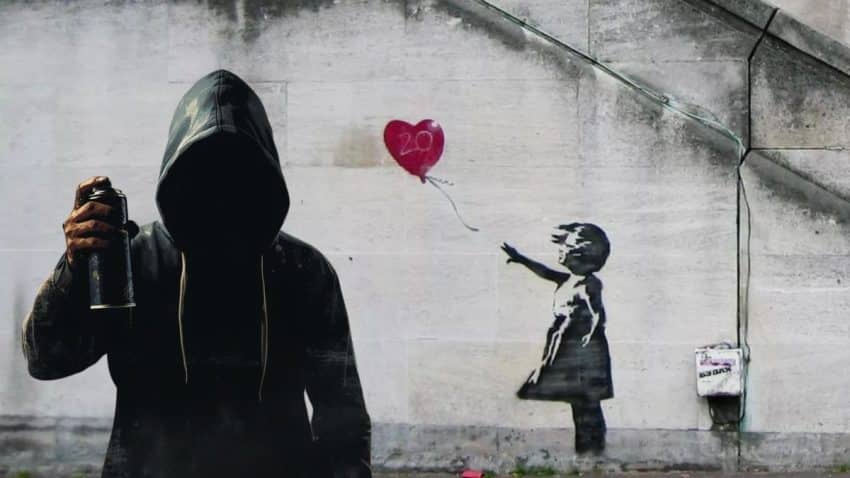
The most famous example is Banksy.
Banksy’s decision to remain anonymous is not only about privacy or legality; it is also a brilliant marketing strategy.
The absence of a public identity has become inseparable from the work itself, amplifying mystique, media interest, and cultural impact.
In this case, not presenting oneself at all is the brand.
3. Multiple Careers, One Clear Identity
If you have another professional career (lawyer, doctor, academic, entrepreneur) using a separate artist name can help avoid confusion.
You don’t want:
- art searches to overshadow your primary profession, or
- professional clients stumbling onto work that belongs to a different context.
A pseudonym can create clean boundaries while allowing both identities to thrive independently.
Pseudonyms as a Marketing Tool
Creating a Cohesive Artistic Identity
A name sets expectations.
It suggests:
- seriousness or playfulness,
- tradition or experimentation,
- conceptual depth or visual immediacy.
Some artists use pseudonyms to reinvent themselves stylistically or conceptually. This can work, if done carefully.
However, fabricated identities or cultural misrepresentation can backfire badly. Authenticity still matters, and today’s audiences are quick to question inconsistencies.
Gender, Origin, and Bias
Names carry assumptions.
Some artists intentionally choose:
- androgynous names,
- neutral initials,
- shortened or altered versions of their real name
…to avoid unconscious bias related to gender, nationality, or ethnicity.
This is not about hiding who you are; it’s about deciding how much of that information you want to lead with, and how it affects the way your work is received.
The Social Media Factor: Your Name Is Your Handle
Today, your artist name must work across:
- websites and domains
- newsletters
- exhibition materials
- search engines
Before committing, always check:
- Is the handle available?
- Is the domain available?
- Is the name already strongly associated with something else online?
Many contemporary artists now use:
- shortened names,
- single-word monikers,
- or consistent usernames that become their primary identifier.
Your pseudonym should be searchable, repeatable, and memorable, both online and offline.
Potential Downsides of Using a Pseudonym

Using a pseudonym is not always the right move.
Be cautious if:
- you’re already established under your real name,
- you frequently change names or personas,
- the name doesn’t align with your work or audience.
Consistency builds trust. Constant reinvention can dilute credibility and make it harder for collectors and curators to follow your career.
There can also be personal challenges: friends and family may forget or resist using your artist name. Clear communication helps avoid awkward situations.
And always research linguistic meanings: a name that sounds great in one language may have unintended meanings in another.
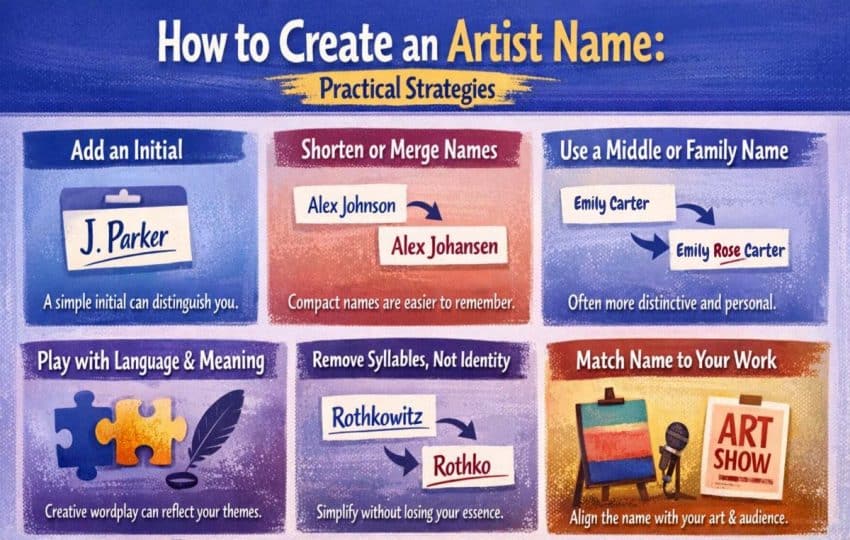
How to Create an Artist Name: Practical Strategies
If you decide a pseudonym is right for you, here are some proven approaches:
- Add an initial
A simple initial can distinguish you without erasing your identity. - Shorten or merge names
Compact names are easier to remember and easier to brand. - Use a middle or family name
Often more distinctive and personal. - Play with language and meaning
Thoughtful wordplay can reinforce your artistic themes. - Remove syllables, not identity
As Mark Rothko did, simplifying without reinventing entirely. - Match the name to your work and audience
A playful name may suit one practice, and undermine another.
Once you choose a name, test it. Say it out loud. Imagine it on a wall label, a website, an exhibition poster. If it still feels right after a few weeks, commit, and stay consistent.
Final Thoughts: Identity Is a Strategic Choice
Your artist name is part of your professional toolkit.
Whether you choose your birth name, a modified version, or a pseudonym, the key is intentionality. In a crowded digital art world, clarity and consistency matter more than ever.
Next Steps with AGI Fine Art
If you’re building or refining your artistic career, we invite you to:
Explore the open calls currently available through AGI, and see which opportunities align with your work and identity.
Seek professional guidance if you have doubts about branding, representation, or copyright implications connected to your artist name.
A short consultation can help you avoid long-term confusion, and build a stronger, more coherent presence in the art world.
Get the next article and open calls
A few times a year. Unsubscribe anytime.
Questions? Feedback? Thoughts on this article, or a topic you’d like us to cover?