Building a Collector List
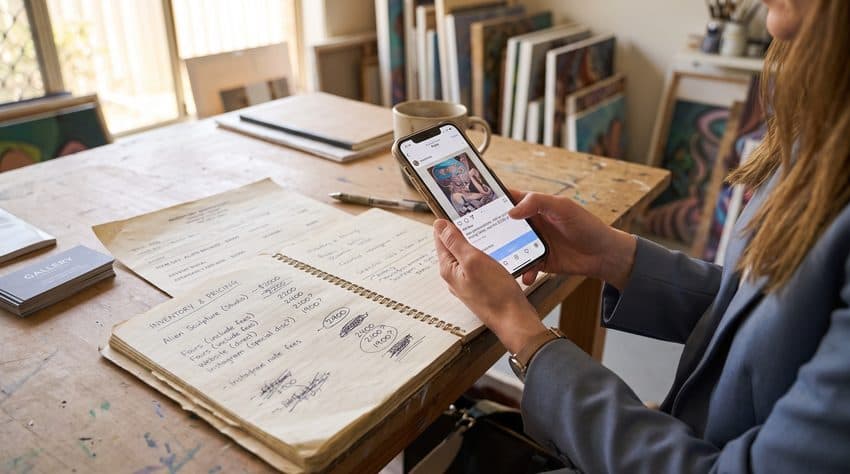
Most artists can name their favorite galleries, favorite fairs, even their favorite framers. Far fewer can name their collectors, not just as buyers, but as an actual, tracked group of people who have shown real interest in the work and might buy again. That gap is one of the most fixable problems in an early or mid-career practice, and one of the most quietly valuable to close.
A collector list isn’t a sales gimmick. It’s simply a record of who’s already paying attention, so that attention doesn’t evaporate the moment someone scrolls past a post, leaves a fair booth, or closes an email. Building one is slow, unglamorous work. It’s also one of the few growth activities an artist fully controls, independent of any single gallery, platform, or algorithm.
Start With The Definition, Not The Tactics
Before newsletters and follow-ups, it helps to be precise about what actually counts as “a collector” for this purpose. It’s broader than people who’ve already bought something; it includes anyone who has shown specific, real interest: someone who lingered at a piece and asked questions, a past client who bought once and might buy again, a curator or interior designer who places work on behalf of others, a friend of a friend who keeps commenting thoughtfully online.
The list isn’t a database of everyone who’s ever liked a post. It’s a much smaller, much more valuable group: people with a demonstrated, specific connection to the work, tracked deliberately instead of left scattered across inboxes, DMs, and memory.
The Newsletter: Owned, Not Borrowed, Attention
Social platforms are useful for discovery, but they’re rented space: an algorithm change, a platform decline, or an account issue can erase that reach overnight. A newsletter is the one channel an artist actually owns. The list belongs to the artist, not to a platform, and every subscriber on it chose, at some point, to hear more.
A few principles keep a newsletter sustainable rather than another source of guilt:
- Low frequency, high signal. Four to six emails a year (a new body of work, an upcoming show, a studio update) outperforms a weekly newsletter that quietly stops being sent after a month.
- Show, don’t sell. The most effective artist newsletters read like a studio update to someone who already cares, not a sales pitch. A social-media-style process update, expanded into a short, personal email, tends to work better than a formal announcement.
- Make signing up easy and specific. A simple sign-up on a website or a QR code at a fair booth, framed as “hear about new work first,” collects far more real subscribers than a vague “join my mailing list.”
- Segment lightly, if at all. Even a rough split (collectors who’ve bought before, versus people who’ve shown interest but haven’t yet) makes it possible to write to each group appropriately without needing complex tools.

Social Media As A Discovery Net, Not A Sales Floor
Social platforms are rarely where a serious sale closes, but they’re often where the relationship starts. Someone finds the work through a post, follows for a while, and only converts into an actual collector months or years later, usually after building enough familiarity with the work and the artist behind it to feel comfortable reaching out.
That means the job of social media in this context isn’t to push for sales directly. It’s to consistently surface the kind of process and presence that makes an artist discoverable in the first place, so that when someone does start looking seriously, whether through a search engine or a platform, there’s a real, current trail to find.

A few habits that turn social presence into actual collector-list growth, rather than just engagement:
- Respond personally to genuine questions in comments or DMs, rather than leaving them to a generic reply; this is often the first real interaction with a future collector.
- Move promising conversations off the platform and toward the newsletter or a direct follow-up, since a DM thread is easy to lose track of and a subscriber list isn’t.
- Note recurring names: the same person consistently engaging thoughtfully over months is a much stronger collector-list candidate than someone who liked one post.
Fairs And In-person Shows: The Highest-value Contacts, If They’re Captured
Art fairs, open studios, and exhibitions produce some of the strongest collector leads an artist will ever get: real, in-person conversations with people who took the time to show up and look closely. They’re also the leads most commonly lost, because there’s no system in place to capture them before the fair ends and the notebook, business card, or memory of the conversation fades.
A simple, low-friction system solves most of this:
- Have a physical way to collect contact information at the booth: a small sign-up sheet, a QR code linking to the newsletter, or simply asking directly: “Can I send you an update when this series is finished?”
- Write one line of context immediately after each real conversation: which piece they responded to, what they mentioned, whether they asked about price. Memory fades within days; a single sentence captured that evening doesn’t.
- Follow up within a week, not a month. A short, specific note (referencing the actual conversation, not a generic “great to meet you”) while the interaction is still fresh dramatically increases the chance of it turning into a real connection.
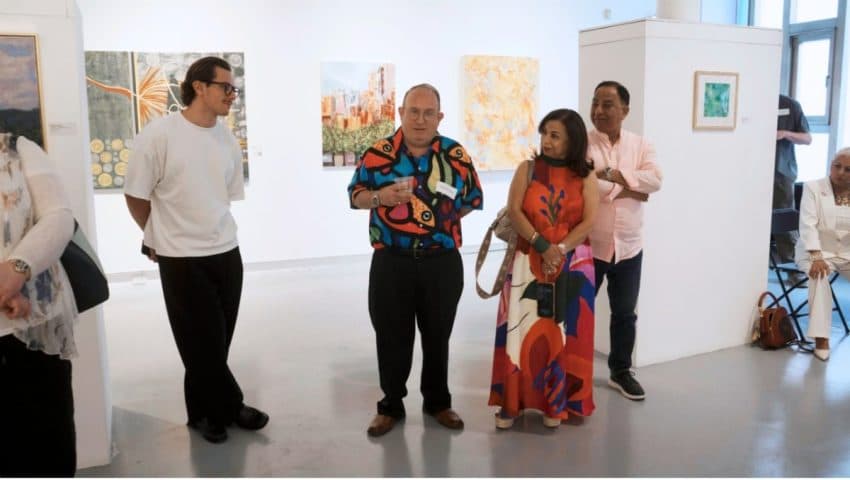
Fairs that open the door to international audiences are particularly worth this effort, since the in-person contacts made there are often the hardest to rebuild through any other channel later.
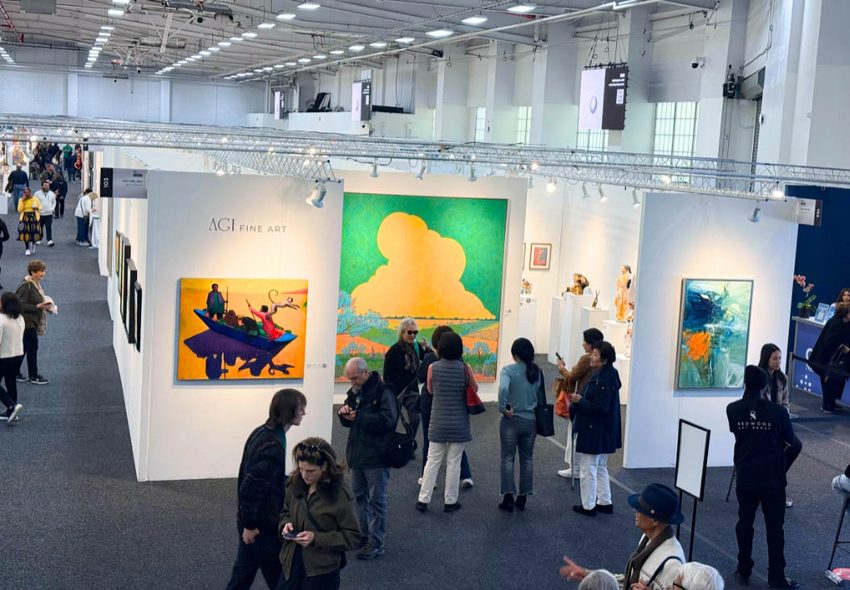
an ideal setting for collecting high-value collector contacts.
Treat The List As Relationships, Not A Funnel
It’s tempting to think about a collector list in purely transactional terms: a pipeline to be optimized, a funnel to be filled. That framing tends to backfire. Collectors, especially serious ones, can generally tell when they’re being treated as a sales target rather than a person with a genuine interest in the work, and the relationship curdles quickly once that becomes obvious.
A more durable approach treats every name on the list as an actual, individual relationship: someone who gets a personal note when a body of work is finished, who’s told directly (before a public announcement) when a new series is ready, who’s remembered specifically rather than blasted generically. This is harder to scale, and that’s precisely the point: a smaller list of people who feel genuinely known tends to outperform a much larger list that feels like a mailing address.
A clear, considered pricing structure supports this same relationship-first approach: collectors who feel like they’re getting a fair, consistent number, rather than a price that shifts depending on who’s asking, are far more likely to come back and to recommend the work to others.
Let The List Grow Slowly, And Keep It Honest
A collector list built over two or three years of consistent, low-pressure effort (a newsletter sent a few times a year, real conversations captured at fairs, genuine engagement online) tends to be far more valuable than one assembled quickly through aggressive tactics. Quality compounds here in a way volume doesn’t: twenty people who genuinely trust the work and the artist behind it will do more for a career, over time, than two thousand names collected without any real connection behind them.
This is also where a more structured, service-based support system can help, particularly once a list starts generating a genuine collector base, someone who understands both the relationship side and the professional infrastructure needed to manage it well as it grows.
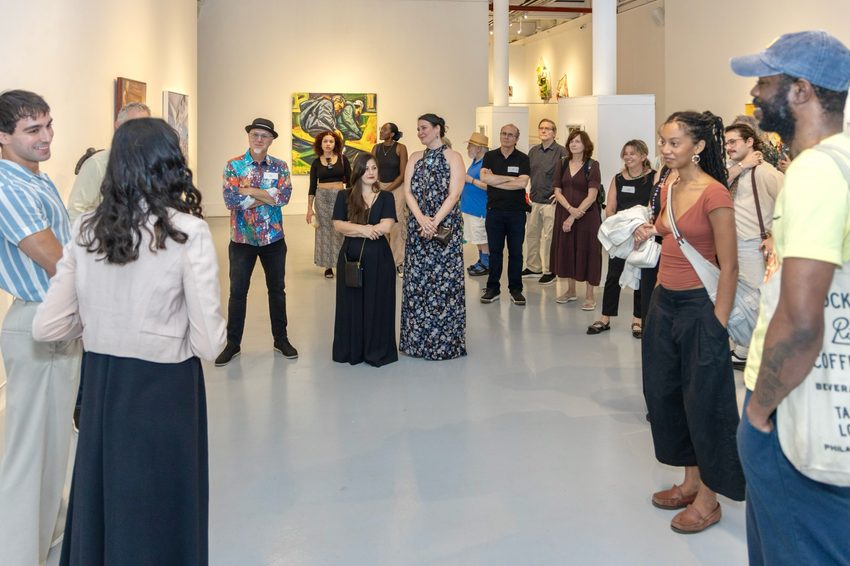
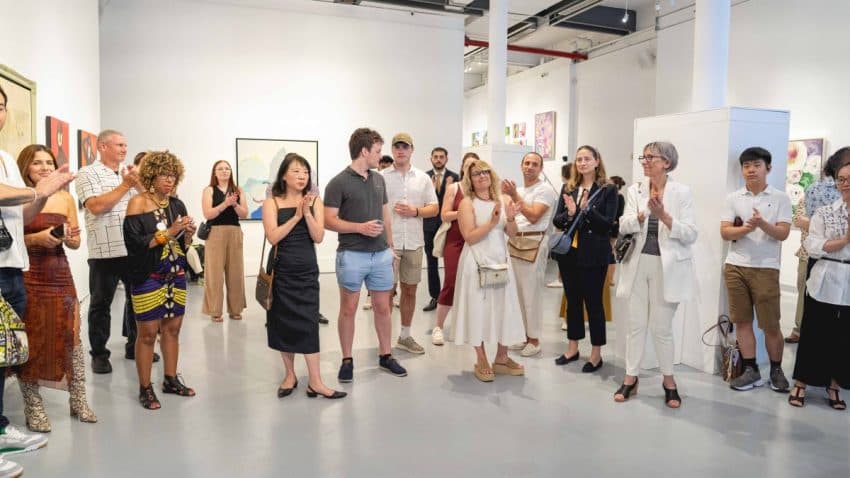
The 40th Chelsea International Fine Art Competition exhibition at Agora Gallery.
From First Contact to Ongoing Collector
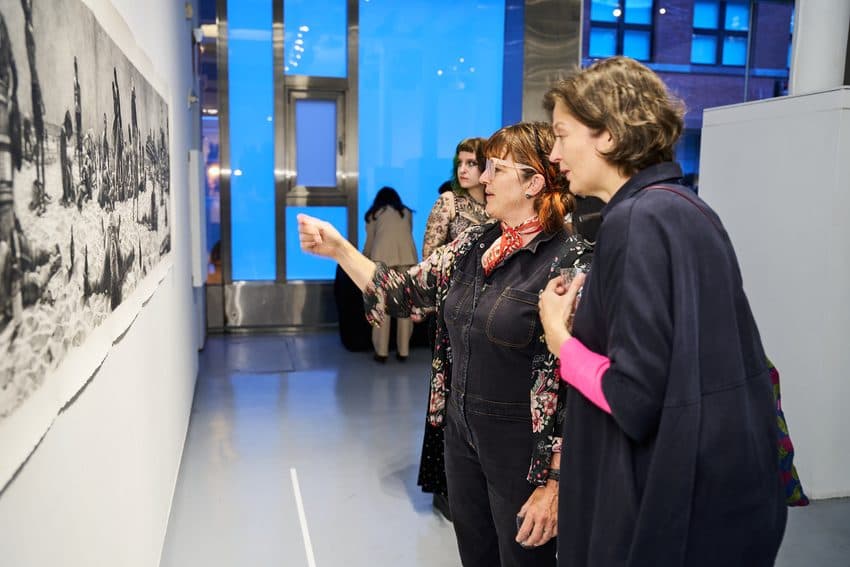
Fairs and curated exhibitions remain some of the most effective places to meet the collectors who will anchor that list for years to come.
Explore AGI Fine Art’s current open calls to put your work in front of the audiences, curators, and collectors actively looking for it.
Get the next article and open calls
A few times a year. Unsubscribe anytime.
Questions? Feedback? Thoughts on this article, or a topic you’d like us to cover?