Remarketing Your Art: How to Turn Buyers into Collectors
As an artist, it sometimes seems like you’re pouring your heart and soul into the works you create. That’s why it’s so wonderful when someone falls in love with your art and decides to purchase a piece. Just knowing that you’ve somehow connected with a stranger who was able to see the beauty and value in what you’ve created – it’s such a fulfilling moment. What many artists don’t realize, though, is that a sale isn’t the end game. That is, artists can and should use the opportunity of selling an artwork to turn a one-time buyer into a long-term collector.
It’s easy to see such a purchase as the final element of the story: a successful conclusion to the time that went into both the creative process and the marketing efforts that contributed to the art sale. Of course you should be proud of all of your hard work. But have you ever considered a sale to be a marketing opportunity? A customer is the best “lead” you can ask for; you know they a) like your style of work and b) buy artwork. The question is: how can you turn a buyer into a repeat purchaser?
Purchases as Marketing Opportunities: that’s what Remarketing is
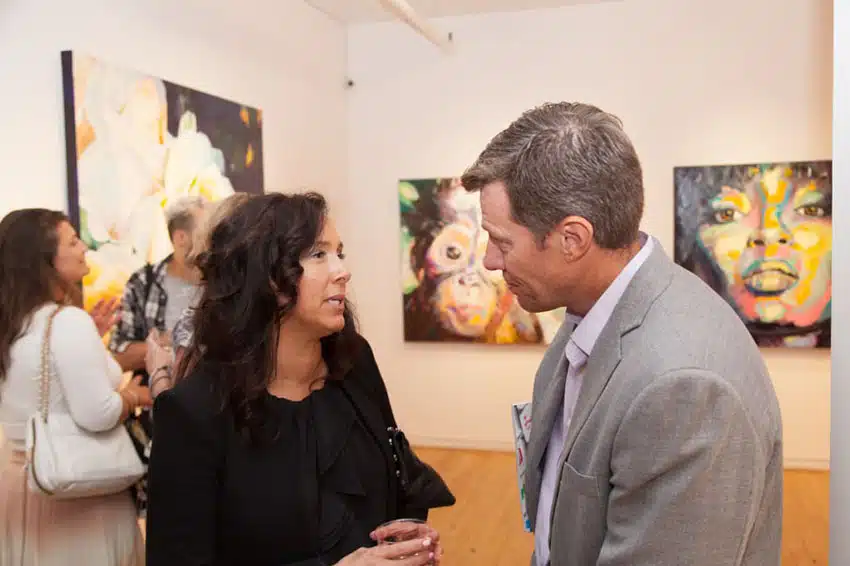
The process that leads up to their first purchase of your art is exciting in itself, but it also represents a great chance for you to learn more about this buyer. What are their motivations? Their tastes? All of this information can be useful later on, and by appearing interested, you will also engage the client, making them feel valued and appreciated. By asking these questions, you’re actually accomplishing two marketing strategies: general market research and one-to-one marketing.
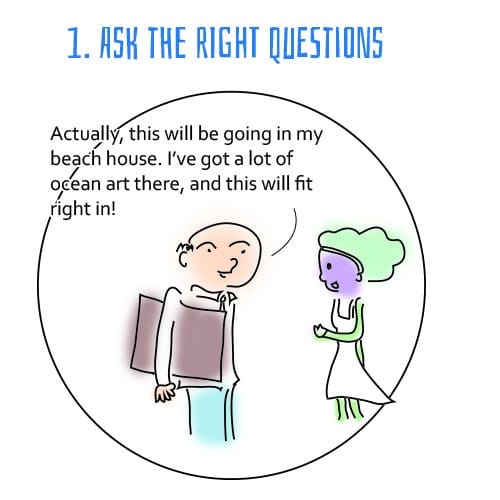 One-to-one marketing
Also known as individual marketing or personalized marketing, is the method of personalizing your sales pitch/marketing strategy to one customer. By discussing these elements with the person who is buying your art, you’ll be able to create a custom marketing plan to encourage that buyer to come back in the future.
Questions to ask:
- Why are they buying this piece? (Is it a gift? Will it be going in a specific room/space?)
- Do they often buy artwork? (Find out what kind of artwork they buy and when they are most often looking for new art.)
- How did they hear about you? What about your work caught their eye?
This can all be useful information. For example, if they are buying a seascape painting because it is particularly suited to their beach house, then you’ll know that, in the future, you should contact them with promotions focused on your seascapes as opposed to desert scenes.
If they’re buying your art as a gift, you can make a point to contact them during the holiday season to see if they’re interested in buying another gift. Keep comprehensive records of all of these details, so that you can use them in the future when you follow up with these particular buyers.
More tips: Be friendly and open when talking to your art buyer. Speak about other pieces and the stories behind them. By not just focusing on the single work being purchased, you will introduce the buyer to your brand and your collection of art for sale. This will establish the idea of future sales with them (even if it’s just a subconscious suggestion). Include business cards or catalogs along with the purchase, so that they will have a reminder of your portfolio later on.
General Market Research
Marketing executives and firms often have things like focus groups and surveys where they gain insights from their customers. This is called market research, and the data gained helps these businesses understand how to better market their product and increase sales. Think of your art buyer as a micro-focus group. This is your opportunity to get feedback from your target audience. So ask them about your artwork and about the presentation of it. You can talk about the way your artworks are displayed and get their input to make sure you’re showing your works as optimally as possible. Listening to their opinions and reactions to your art can also be instructive. Not only might you learn some useful information for your general development, you’re also doing some advanced psychological sales techniques. The more you encourage the customer to think about your art and to engage with it on various levels, the deeper a connection he or she will form to you and your creations, something that will bring them back later on.
Stay in touch with us! Our Newsletter is packed with inspiring stories, art tips, and Agora Gallery’s latest exhibition announcements.

Keep In Touch Through Email or Social Media
The best way to encourage a second purchase from a buyer is to make sure that they don’t forget you. Follow up with them. You don’t have to call them at home (in fact, it may be too personal), but it is easy to stay in touch in this digital age. Encourage them to sign up for your mailing list, follow your blog, or become a fan of your professional Facebook page, Twitter, Instagram, or any social media page you may utilize. Your art buyers are people who have already proven that they love your work, so who better to keep in touch with? What could be a better audience, when it comes to promoting your work, than those who have already invested in it?
You’ll want a system of organization so that you don’t lose track of any collectors. Your system may have various elements specific to your work but here are some tips to consider:
- Make a calendar on your computer that has your buyers’ birthdays. (This can be something you ask them to provide when they sign up for your mailing lists). On their birthday, you can send a personalized greeting with one of your new works (birthday-related, if possible).
- Create spreadsheets/lists based on interests. That way, you can have a newsletter specific to your buyers who were interested in seascapes, and another one for your buyers interested in your sculptures.
- Keep a file on your art buyer. No, it doesn’t need to be a thick FBI-style folder; you can simply put a page together that has the name of the artwork they bought, their name/address, birthday, and any special details you remember from your conversation. Make sure it’s easy to access so you can always personalize your communications with that buyer.
Review these files every now and then, and you can follow up with each buyer when you have something relevant to update them with. These little touches can be surprisingly effective, multiplying that connection they once felt to you and your work. They’ll recognize that you’re putting effort into maintaining a relationship, and it will remind them of what originally inspired them to buy your art.
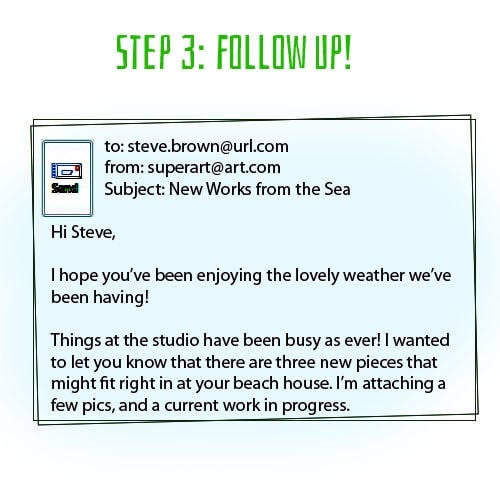
More generally, you’ll want to focus energy on your social media pages and e-mail updates/newsletters.
Be sensible about how often you are updating your pages and how frequently you send updates to your buyers. There’s a delicate balance between ‘staying in touch’ and spamming. The frequency of your updates depends on the method of communication:
- Email updates can be sent approximately once a month (maybe twice, if there are special news updates)
- You can update your Facebook group several times a week, with shorter messages
- Twitter and Instagram can be updated many times a day – just don’t be too repetitive with your content.
- Concentrate your updates those times of year when you know that people are looking to purchase art (like the holiday season). You can also offer gift vouchers for your art, for those who may want to give your work as a gift but don’t feel comfortable picking out a specific piece.
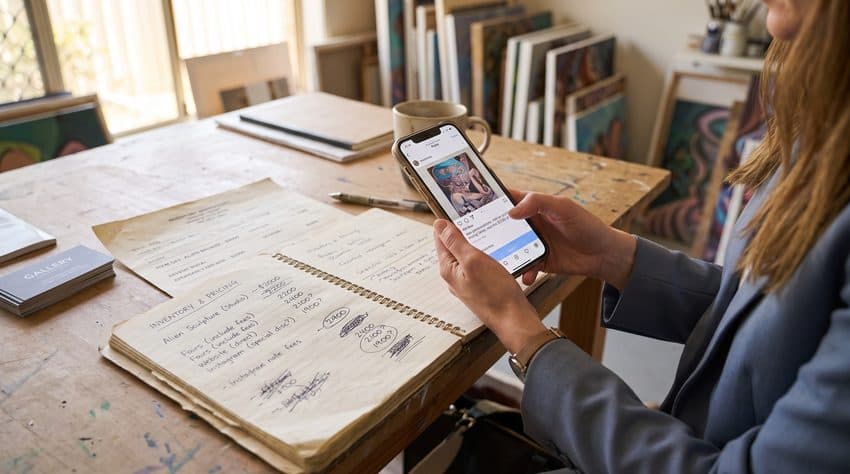
Some popular social media updates can include “behind the scenes” updates: photographs of your studio or images of your works in progress are great ways to keep people intrigued.
You can use your social media or email updates to offer special deals or competitions to those who follow you. You might offer a print of your work as a prize for the “best description” of your work, or allow your fans to vote on which of image you should use for your holiday greetings cards. This is a good way to encourage people to engage with you and your work in a way that doesn’t cost them much in terms of time or energy, but is fun and memorable. As such, it’s great for building up a community of fans.
The visual aspect of your communications is as important as the content. You’re an artist, so you want it to look appealing and eye-catching; give time and thought to the design of your newsletter and the images that should be included in it. Be sure to check out our guide to creating the ultimate artist newsletter.
Make It Easy to Access Your Art

What good are all of these efforts you’re putting into marketing and sales-generating if it is difficult for somebody to buy your work? It sounds obvious, but there are many critical mistakes that many artists can make.
Don’t be difficult to find
Maintain an updated online presence through your website, blog, or social media channels, and make sure that the important details are on your business cards and other promotional material.
If you change your e-mail address, phone number, or physical address, make sure you both update your materials and make an announcement to your followers.
Make the art easy to buy
Whether you’re selling online or out of a physical location, streamline the sales process. Don’t make someone go through endless red tape and forms to complete their purchase; the majority of sales that are lost are abandoned at checkout.
- If you’re selling through a website, invest in a web developer who can make the check-out process easy and secure.
- Your online gallery should have good, clear images that appeal to the buyer, and they must be easy to navigate.
- If you’re showing in a gallery, make sure they are open during sensible hours and have someone always available who can do the sales.
Advertise where people can see your art
Apart from anything else, previous purchasers will be interested in learning where you’re showing now, and what new works you’re displaying. It’s good marketing to make sure that people know you’re an active member of the artistic community – and it’s a good opportunity to encourage people to come and see.
Hold open studio days once a month, or let people know when you’ll be in the gallery in person. It’s a great opportunity for them to catch up personally.
Marketing your art doesn’t have to be a hardship, but it is something you need to stay aware of almost every day. When somebody buys your artwork, you know you’re doing something right, but don’t stop there. Use these tips to encourage repeat purchases and to establish long-lasting relationships with your collectors.
And it won’t be too painful, since you are starting at an advantage: these are people who love your work. All you have to do is remind them that you’re there, encourage them to stay in touch, and give them the chance to see you and your work grow. Good luck!
With over 30 years of experience, Agora Gallery offers artists the opportunity to present their work to a broad range of national and international art collectors and buyers. Looking to develop your artistic career and build a presence in New York City and worldwide? Book an online career development consultation meeting today.
Get the next article and open calls
A few times a year. Unsubscribe anytime.
Questions? Feedback? Thoughts on this article, or a topic you’d like us to cover?