Social Media as a Primary Gallery Discovery Channel for Emerging Artists
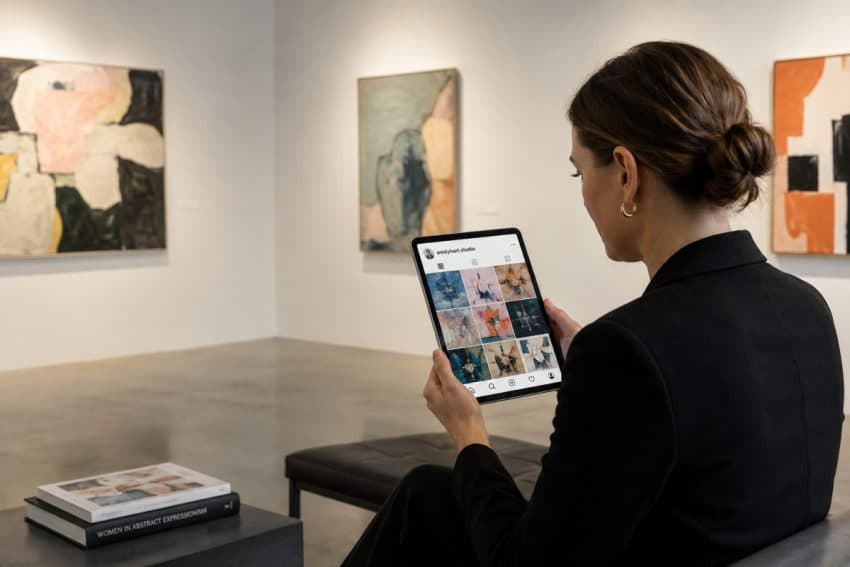
Not long ago, the path from studio to gallery followed a predictable sequence. You built a body of work, assembled a portfolio, researched galleries, sent submissions, and waited. The gallery held the keys to visibility, and the artist’s job was to knock on the right doors.
That sequence hasn’t disappeared. But a parallel path has opened: one that starts on a phone screen and ends in a gallery conversation.
Social media has become a primary discovery channel for emerging artists. Not a supplementary tool, not a marketing add-on, but the actual first point of contact between an artist’s work and the people who might exhibit, collect, or represent it.
Why Social Media Now Functions Like a Portfolio
The shift is partly about platforms and partly about behavior. Galleries, curators, and collectors have changed how they look for new work. Browsing Instagram, following hashtags, watching studio process videos on TikTok or YouTube: these are now standard parts of how art world professionals discover artists they haven’t heard of yet.
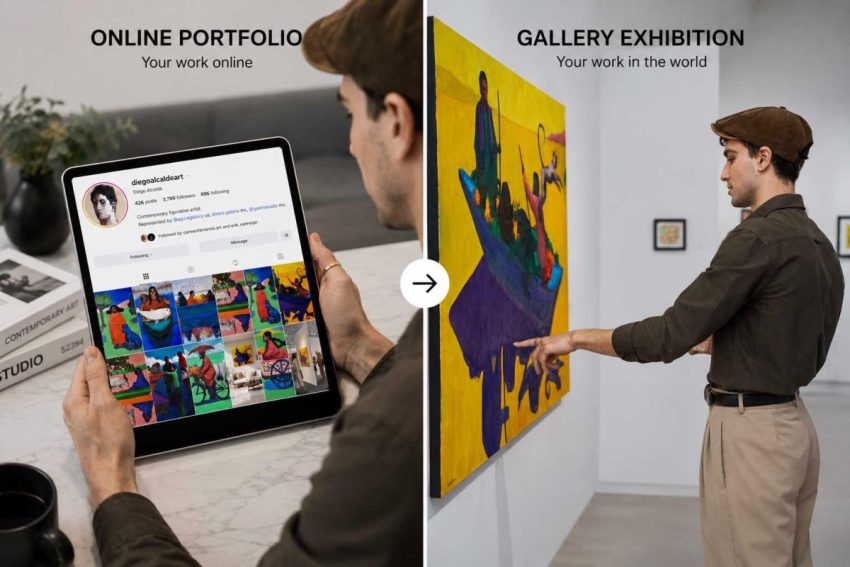
This means your social media presence isn’t separate from your professional portfolio. For many people who encounter your work, it is your portfolio: the first one, and sometimes the only one they’ll look at before deciding whether to reach out.
The implications are significant. A weak or inconsistent social presence no longer just limits your audience. It limits your professional opportunities.
The Platforms That Matter in 2026
Instagram remains the dominant platform for visual art discovery. Its infrastructure (image quality, hashtag search, Reels, the ability to link to external pages) makes it the most natural environment for presenting finished work and building a recognizable visual identity over time.
What has changed is what performs. Static images of finished work alone no longer drive meaningful reach. The algorithm increasingly rewards content that shows process, context, and personality. For a deeper look at how to use the platform effectively, our guide on how to promote your art on Instagram covers the current landscape in detail, including how Instagram Stories can function as a direct, informal channel between you and your audience.
TikTok and the ArtTok Ecosystem
TikTok’s art community, loosely known as ArtTok, has become a genuine discovery engine for emerging artists. The platform’s algorithm is unusually democratic: it surfaces content based on engagement rather than existing follower counts, which means an artist with 2,000 followers can reach 200,000 viewers with a single video.
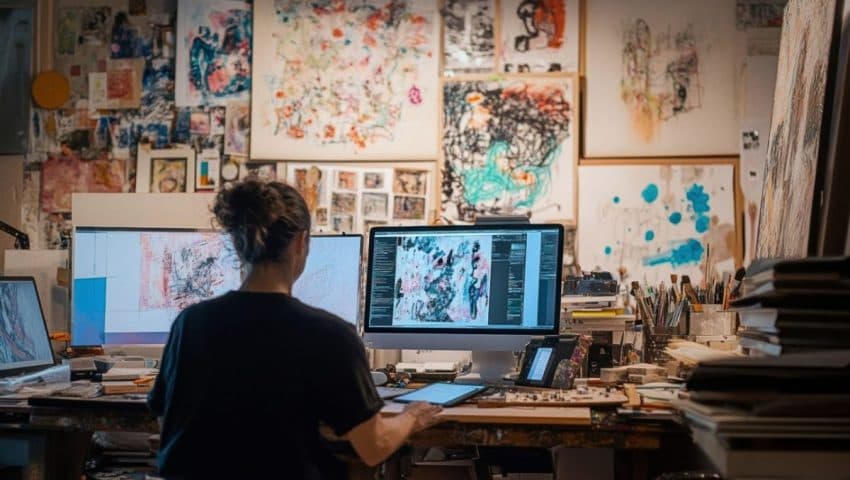
The content that works on ArtTok is specific: time-lapses of work in progress, studio tours, behind-the-scenes glimpses of the creative process, and direct conversation with an audience about the meaning and making of the work. It is, in other words, content that builds relationship before it builds transaction.
For emerging artists who are articulate about their practice and comfortable on camera, TikTok represents one of the fastest routes to genuine visibility in 2026.
YouTube
YouTube occupies a different but complementary role. Long-form studio content (full process videos, artist interviews, exhibition walkthroughs) attracts a more intentional viewer than TikTok’s scroll-driven format. The audience is smaller but more invested, and the content has a longer shelf life.
For artists building a serious long-term presence, YouTube rewards depth. A well-produced studio tour or a thoughtful conversation about your work can continue driving discovery months or years after it’s published.
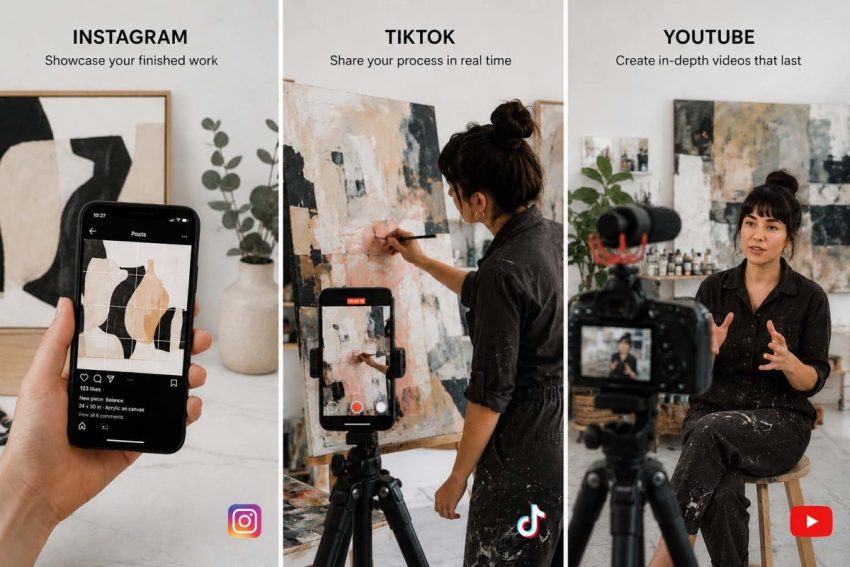
build visibility and connect with audiences in 2026.
The Follower Count That Changes the Conversation
One of the more significant shifts of the past two years is what happens when an emerging artist arrives at a gallery conversation with an existing audience.
Artists with engaged followings in the 10,000–100,000 range are no longer simply submitting work for consideration. They are bringing something tangible to the table: a built-in community of people who are already interested in their practice. This changes the negotiation dynamic. It changes what a gallery can offer in terms of exhibition reach, and it changes what an artist can reasonably expect in return.
This doesn’t mean follower count is a substitute for the quality of the work; it isn’t, and any serious gallery will tell you so. But it does mean that an artist who has built a genuine following has demonstrated something valuable: the ability to communicate about their work in a way that resonates with real people. That skill transfers directly to the gallery context.
What the Algorithm Rewarded in 2025, And Why It Matters
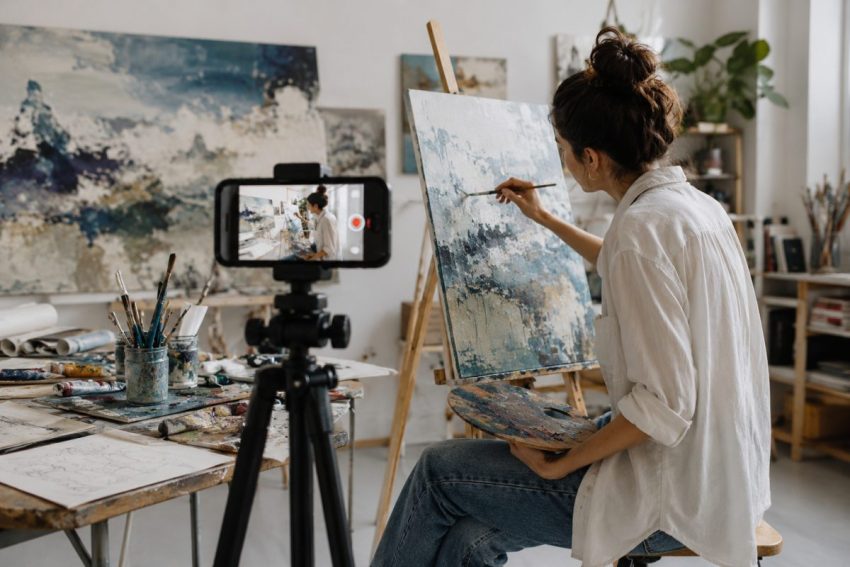
Platform algorithm changes across Instagram and TikTok in 2025 made one thing clear: process content outperforms product content.
Videos showing how a work is made, the decisions behind it, the failures and revisions, the physical reality of the studio: these consistently outperform static images of finished pieces in terms of reach, saves, and profile visits. The reason is straightforward: process content creates context, and context creates investment. A viewer who has watched you build a painting over three videos is not a passive observer. They are, in some small way, part of the story of that work.
This has a direct implication for how artists should think about their content strategy. The goal is not to document the finished object. The goal is to document the thinking, to make the creative process legible and compelling to someone who has never been inside a studio.
From Audience to Exhibition: Closing the Gap
Building a social presence is not the same as building a career. The two need to be connected deliberately.
A strong following creates visibility, but visibility needs somewhere to land. An artist who has built an engaged audience and is ready to take the next professional step (working with a gallery, exhibiting in New York, participating in an international art fair) needs a partner who understands both sides of that equation: the digital and the institutional.
At AGI Fine Art, we work with emerging and mid-career artists who are ready to move from online visibility to gallery presence. We look at the full picture: the quality and coherence of the work, the strength of the artist’s narrative, and yes, the professional context they’ve built around their practice, including their digital presence.
If you’re at that point, we’d like to see your work.
Submit to Our Open Call for Artists
Get the next article and open calls
A few times a year. Unsubscribe anytime.
Questions? Feedback? Thoughts on this article, or a topic you’d like us to cover?