How AI and Search Engines Are Reshaping Artist Visibility
There is a quiet shift happening in the art world: one that doesn’t announce itself with a press release or a fair booth, but plays out in search results, curatorial databases, and recommendation algorithms. It started long before anyone was ready to talk about it: the way artists are discovered has changed.
For most of art history, visibility was built through physical presence. You showed up, you exhibited, you networked. A gallery vouched for you, a critic wrote about you, a collector told another collector. Reputation traveled through people.
That still matters. But it no longer travels through people alone.
Your Artist Profile Is No Longer Just for Humans
A few weeks ago, a post on LinkedIn caught our attention. An art world professional, discussing an article we had published on how to write an artist profile, made an observation that stuck with us:
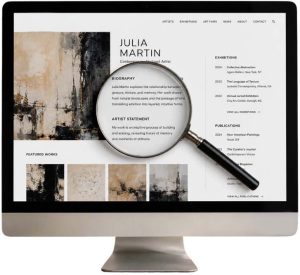
“Artist profiles are evolving into machine-readable identity frameworks. They are no longer written solely for humans.”
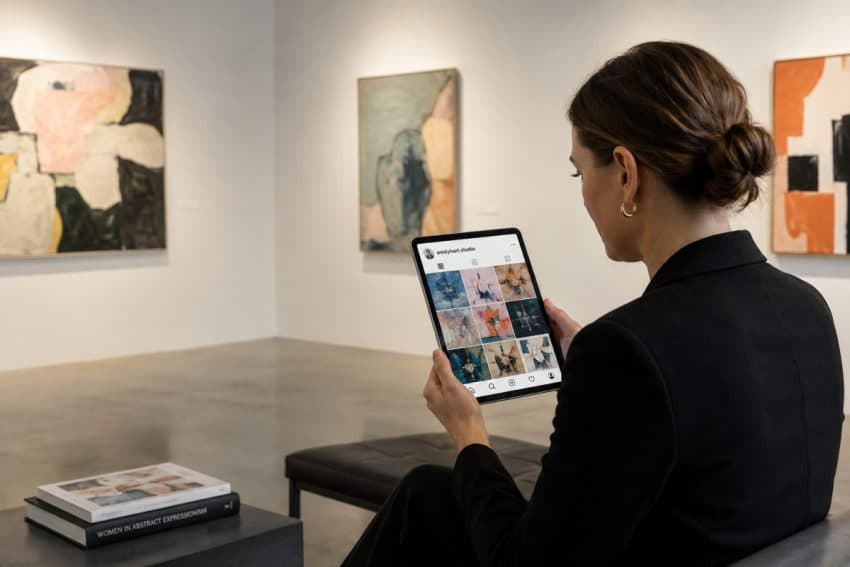
The conversation that followed was telling. Art consultants, curators, and strategists were all circling the same idea: before a gallery director or collector ever encounters your work in person, a version of you has already been assembled (by search algorithms, AI tools, database filters, and recommendation systems) from the fragments you’ve left online.
Your bio. Your exhibition history. The consistency of the language you use to describe your work. The keywords that appear across your website, your profiles, and your press mentions. All of it is being read, indexed, and interpreted, not by a human with taste, but by systems that sort and surface before any human decision is made.
This doesn’t replace taste. It precedes it.
What “Discoverability” Actually Means For Artists Today
Discoverability is not a new concept. Artists have always needed to be found. What has changed is where the finding happens first.
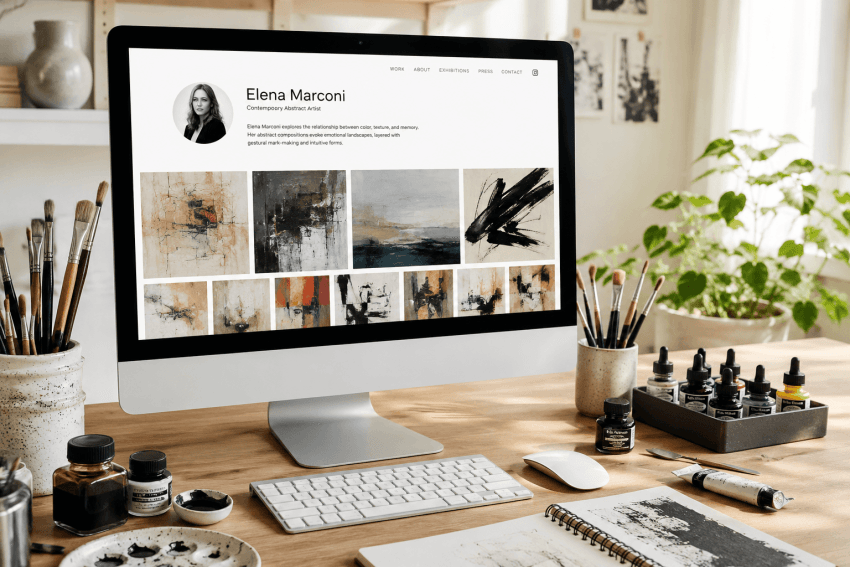
Galleries, fair organizers, and private collectors increasingly use digital tools to research artists before reaching out. AI-assisted curatorial platforms can surface names based on semantic similarity to a collector’s existing collection. Search engines rank artists by the coherence and authority of their online presence. Even a simple Google search of your name, the first thing anyone does when they hear about you, tells a story before you have a chance to tell it yourself.
The artists who understand this aren’t gaming the system. They’re just taking the same care with their digital presence that they take with their physical presentation. A poorly documented portfolio, an outdated bio, or inconsistent language across platforms creates friction. It introduces doubt. It makes the work harder to find, and harder to trust.
The Three Layers of Digital Presence That Matter
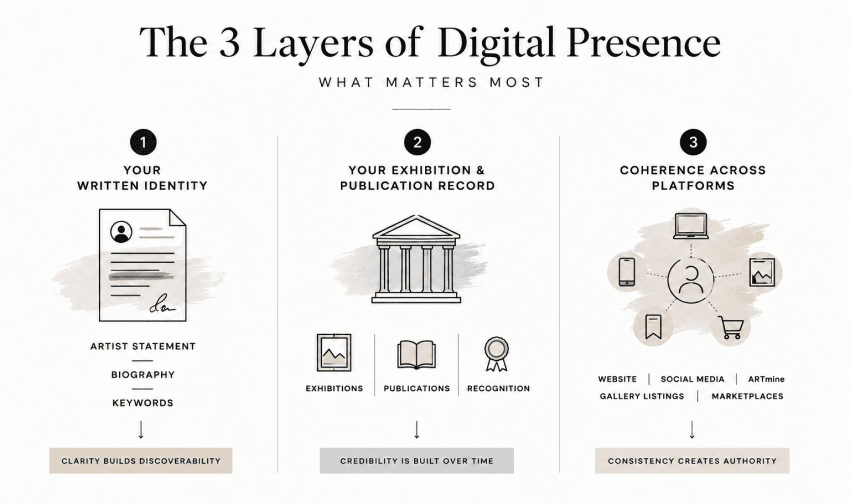
Based on what we observe across the artists we work with and the broader shifts happening in how art is bought and discovered, there are three layers worth paying attention to:
1. Your written identity
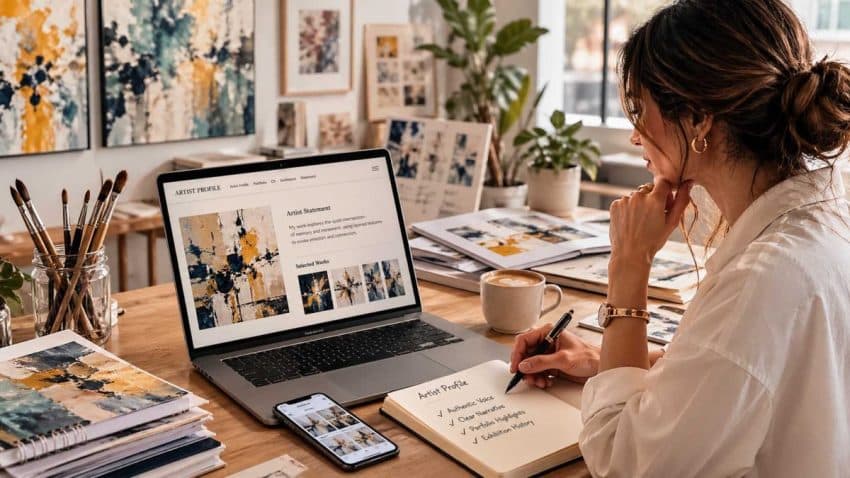
This means your artist statement, your biography, and any descriptive language around your work. Are you using terms that are consistent, specific, and legible to someone outside your immediate context? Vague language doesn’t travel. Clarity does, both for humans and for the systems that index your content.
2. Your exhibition and publication record
Not just as a list, but as a signal. Every juried show, every gallery representation, every publication mention is a data point that contributes to what might be called your digital provenance: a traceable record of credibility that builds over time. Gaps in this record, or records that exist only offline, are invisible to the systems that matter.
3. The coherence of your presence across platforms
When your website, your ARTmine profile, your social channels, and your gallery listings all tell the same story in compatible language, that consistency reads as authority. When they contradict each other (different bio versions, different descriptions of the same work) the signal weakens.
None of this is complicated in principle. It requires attention, not technical expertise.
What This Means for How You Build a Career
The conversation on LinkedIn landed on something useful: this isn’t really about gaming algorithms. It’s about understanding that professional presentation has always mattered: the medium has simply expanded.
Artists who have been skilled at marketing and networking have always had an edge. The ones who showed up, who wrote clearly about their work, who maintained relationships with galleries and curators, they moved faster. What’s changed is that the “showing up” now includes a digital layer that doesn’t sleep, doesn’t forget, and doesn’t require you to be in the room.
For artists who have historically found marketing uncomfortable or opaque, this can feel like yet another demand on top of an already full creative life. We understand that. But it can also be reframed: your digital presence is, at its core, an extension of how seriously you take your practice. The same rigor you apply in the studio can be applied to how you present yourself to the world.
And the good news is that you don’t have to figure it out alone.
How AGI Fine Art Approaches This
Part of what we do, beyond exhibitions and art fairs, is help artists think through their presentation strategically. When an artist submits work to us, we look at the whole picture: the quality of the work, yes, but also the coherence of the narrative around it, the clarity of the documentation, the readability of the professional context.
This isn’t about turning artists into marketers. It’s about making sure that the work gets the visibility it deserves, not just in the room, but in the broader ecosystem where discovery now begins.
If you’re curious about how to develop this further, our article on writing an artist profile goes deeper into the practical side: how to structure your bio for both human readers and digital systems, what to include, and what to leave out.
Want to stay current on how the art world is changing, and what it means for your practice? Subscribe to our newsletter for resources, exhibition opportunities, and insights for working artists.
Get the next article and open calls
A few times a year. Unsubscribe anytime.
Questions? Feedback? Thoughts on this article, or a topic you’d like us to cover?