How to Write an Artist Profile: Balancing Market Appeal with Digital Authority

In the contemporary art ecosystem, your Artist Profile serves two masters: the digital algorithm and the human collector. It must be “scannable” for AI and search engines, but it must also be “compelling” for the gallery owner and the investor.
Writing a profile that is both professional and alluring is an art form in itself. Here is how to craft a narrative that builds authority while sparking market interest.
1. The Strategic Opening: Defining Your Market “Entity”
From a market perspective, the first 200 characters are your elevator pitch. This is where you establish your niche and your “unique selling proposition.”
- The Market Logic: Collectors often look for specific “categories” (e.g., Sustainable Art, Abstract Expressionism, Neo-Pop).
- The Professional Hook: Instead of saying “I paint my feelings,” use language that positions you within the art historical or contemporary context.
- Example: “Blending the precision of digital geometry with the fluid tradition of Italian fresco, [Artist Name] creates immersive canvases that explore the tension between technology and nature.”
- Why it works: It’s SEO-friendly (key terms included) but also creates an immediate intellectual and aesthetic curiosity.
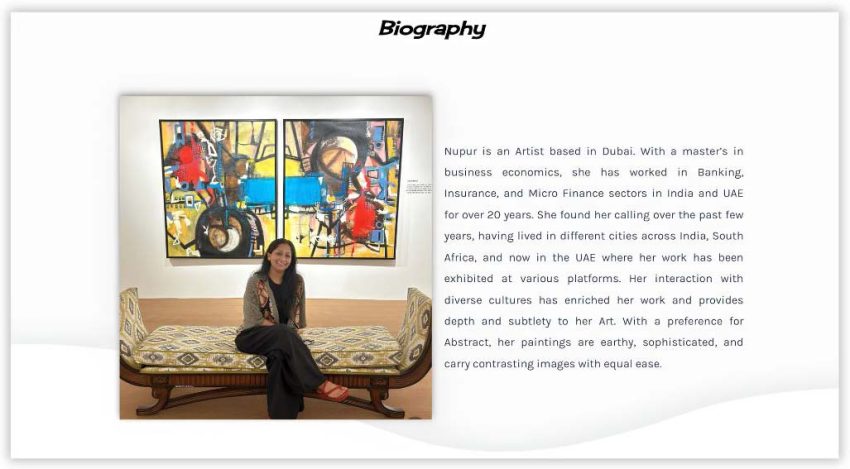
Artist bio example of Nupur Jha highlighting a compelling opening statement and well-defined artistic positioning
2. Narrating Your “Artistic Value”: Beyond the Studio
A professional profile shouldn’t just describe the art; it must describe the value of the art. To attract serious interest, you need to articulate your artistic rigor.
- The “Why” Behind the “What”: Don’t just list your materials. Explain why your choice of medium matters. Using rare pigments or reclaimed materials, for instance, adds a layer of “story” that increases the perceived value for a collector.
- The Concept of Scarcity: Mention if your process is time-intensive or involves specialized techniques. This subtly communicates that your work is a limited, high-effort resource.
3. Building Professional Trust (The “Market Proof”)
In a market driven by trust, your profile must signal that you are a “safe” and “promising” investment. This is what Google calls EEAT (Expertise and Authoritativeness) and what galleries call Provenance.
- Contextualize Your Career: Mention your presence in private collections, specific geographic markets you are expanding into, or your participation in curated environments.
- Validation: If you’ve been selected for juried shows or international fairs, these aren’t just events; they are stamps of approval that reduce the “risk” for a new buyer.
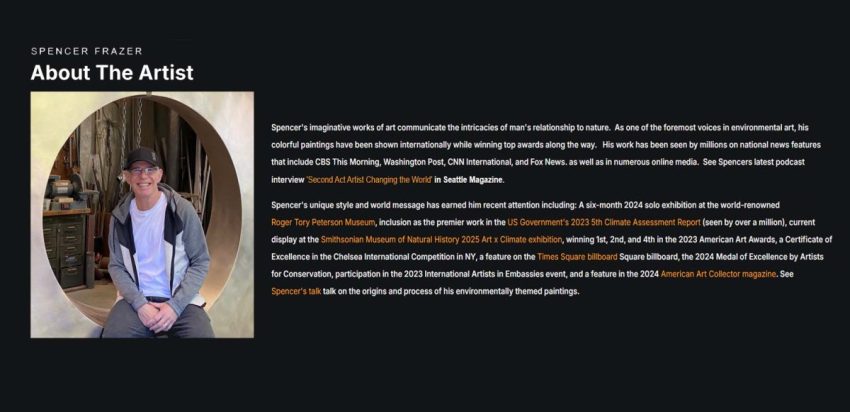
4. Avoiding the “Jargon Trap”
One of the biggest mistakes in artist profiles is using overly complex “Artspeak” that alienates the reader.
- Professionalism vs. Pretension: A profile that is too cryptic can seem unprofessional. The goal is to be sophisticated but accessible.
- The AI Factor: Simple, declarative sentences are better indexed by AI and more easily understood by international collectors whose first language might not be English.
5. The Emotional Connection
At the end of the day, art is an emotional purchase. While you must remain professional, allow a glimpse of your artistic “obsession” to shine through. What is the one question your art is trying to answer?
A profile that ends with a clear, resonant statement about your mission leaves a lasting impression that a CV never could.
From Narrative to Reality: Your Career Path
A polished profile is the first asset you need when approaching professional milestones. It is the document that introduces you to curators before they even see your work in person.
At AGI Fine Art, we specialize in taking these narratives and placing them in the right market context. Whether you are aiming for your first international solo show or a major art fair, your profile is the foundation of that journey.
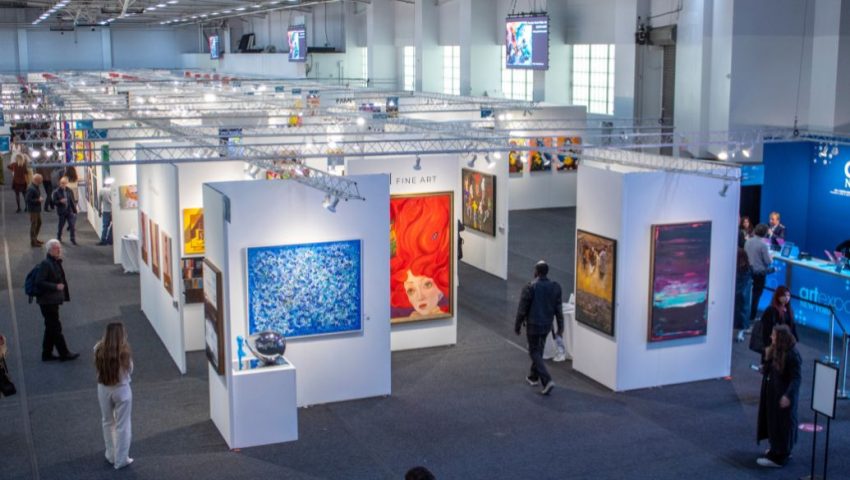
Are you ready to move from the studio to the international stage?
Explore our current opportunities and submit your profile for consideration.
Get the next article and open calls
A few times a year. Unsubscribe anytime.
Questions? Feedback? Thoughts on this article, or a topic you’d like us to cover?