How to Prepare a Professional Certificate of Authenticity (COA) for Your Artwork
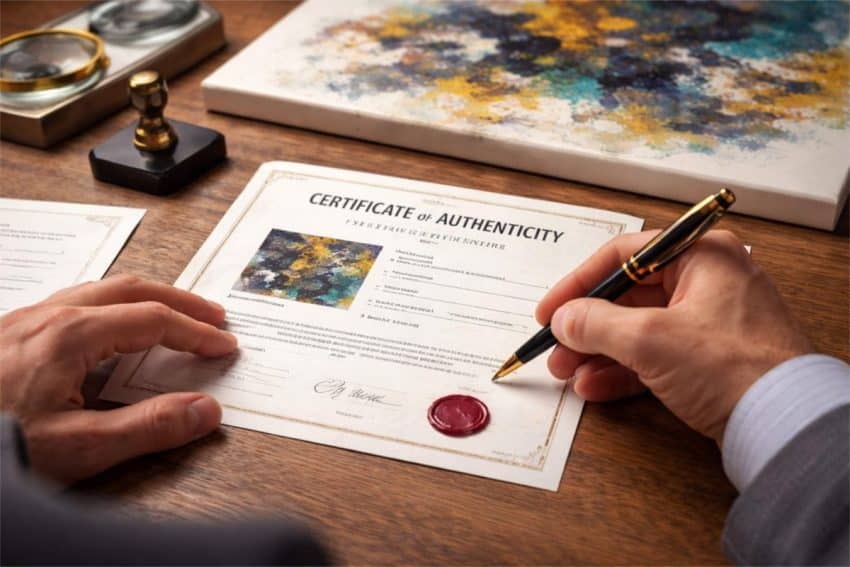
In today’s global art market (fast, digital, and highly interconnected) artists must be prepared to document their work clearly and professionally. A sale can happen quickly, but the documentation that accompanies your artwork has long-term importance. One of the most essential documents is the Certificate of Authenticity (COA).
A COA is more than a formality: it protects you, supports your collectors, and strengthens the long-term value and provenance of your work. This updated guide explains what a COA is, why it matters, and how to create one that meets professional standards.
What Is a Certificate of Authenticity?
A Certificate of Authenticity is an official document that verifies that an artwork is genuine and created by the artist named in the document.
A well-prepared COA:
- confirms authorship
- supports provenance
- helps prevent forgery
- provides essential information for future cataloguing, resale, insurance, and exhibitions
Ideally, every artwork you create should have a COA, whether it has been sold or is simply part of your studio archive.
Why a COA Matters in Today’s Art World
1. Trust and transparency for collectors
A COA gives buyers confidence that the artwork is authentic and properly documented.
It also signals professionalism and care for your artistic legacy.
2. Protection against forgery
With digital reproduction and AI tools becoming more sophisticated, clear documentation is more important than ever.
A COA helps establish the work’s rightful origin and reduces the risk of misattribution.
3. Provenance and long-term value
As an artwork changes hands over time, a COA becomes part of its historical record.
A well-documented provenance can support future value, insurance claims, institutional purchases, and museum loans.
4. A clear record for your own archive
COAs help you maintain an organized catalogue raisonné of your work, including sold pieces, editions, and unique works.
How to Write a Certificate of Authenticity
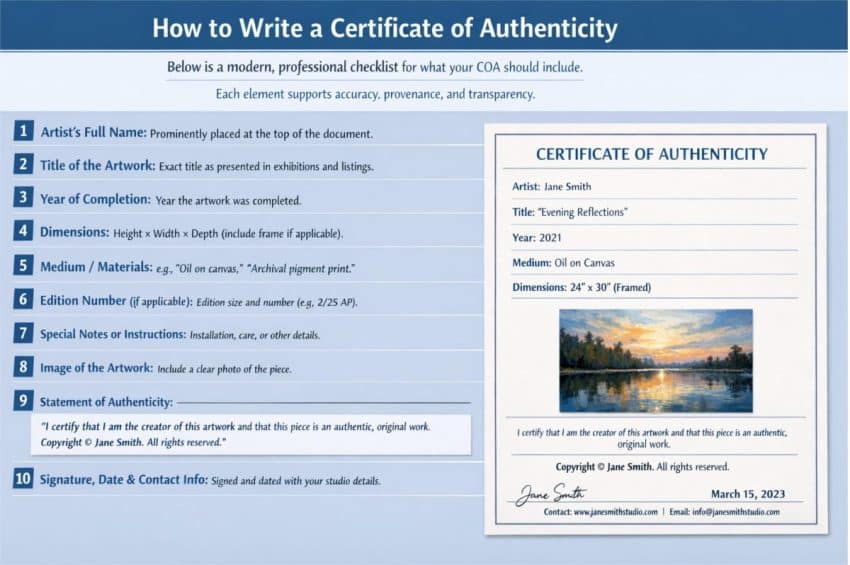
Below is a modern, professional checklist for what your COA should include.
Each element supports accuracy, provenance, and transparency.
1. Artist’s Full Name
Prominently placed at the top of the document.
2. Title of the Artwork
Use the official title exactly as you present it in exhibitions, catalogues, and online listings. Consistency is essential for proper identification and future provenance tracking.
3. Year of Completion
Indicate the year in which the artwork was completed. This information helps contextualize the work within your artistic practice and is particularly important for archival, curatorial, and market purposes.
4. Dimensions
Specify height × width × depth, and note whether measurements include the frame.
5. Medium / Materials
Be specific (e.g., “oil on canvas,” “archival pigment print,” “bronze with patina”).
6. Edition Number (if applicable)
Include edition size, number, and whether proofs exist (AP, PP, etc.).
7. Special Notes or Instructions
Installation guidance, framing considerations, care instructions, or technical details.
8. Image of the Artwork
A high-quality image helps with future archiving and ensures clarity when referencing the piece.
9. Statement of Authenticity
A concise declaration confirming that you are the creator of the work and retain copyright.
Example:
I certify that I am the creator of this artwork and that this piece is an authentic, original work. Copyright © [Artist Name]. All rights reserved.
10. Signature, Date, and Contact Information
Sign the COA physically or digitally using a secure signature method.
Include studio address, website, or professional email.
Optional Professional Additions
Artists who want to elevate their documentation may consider:
- a unique serial number (useful for cataloging)
- a QR code linking to an online archive entry
- mention of any related certificates (e.g., foundry certificates for sculpture)
digital provenance tools (blockchain, digital tokens, etc.) if used
Download a Sample Certificate of Authenticity
Make sure each completed artwork includes a COA.
You can view and download a sample Certificate of Authenticity by simply filling out this form: you’ll receive it by email.
Further Resources for Artists
If you’re building your professional portfolio or preparing your works for exhibitions, explore our articles on:
- crafting a professional portfolio
- preparing for your first exhibition
- promoting your artwork effectively
- navigating open calls and international art fairs
If you’re looking to expand your visibility, discover our latest open calls for artists, including curated exhibitions and art fair opportunities.
Get the next article and open calls
A few times a year. Unsubscribe anytime.
Questions? Feedback? Thoughts on this article, or a topic you’d like us to cover?