Comments, DMs, and Boundaries: Running Your Art Account Like a Professional

Our piece on social media as a discovery channel looked at how a consistent online presence helps galleries, curators, and collectors find the work in the first place. This piece is about what happens once that presence starts working: the DMs asking for a discount, the comment questioning why a piece "costs that much for a few brushstrokes," the polite-sounding request to "collaborate" that turns out to mean free work for exposure. An active account doesn't just bring opportunity. It brings a steady trickle of interactions that test how professionally, and how sustainably, an artist can hold a public presence.
Why This Catches Artists Off Guard
Most artists build a social presence expecting engagement, questions, maybe the occasional sale. Few expect the volume of casual price haggling, backhanded feedback, or requests for unpaid work that comes with any account that gets real visibility. Because these interactions often show up disguised as friendliness ("just curious," "no offense, but," "would love to feature you"), they're harder to firmly decline than an obviously rude message would be, and that ambiguity is exactly what makes them exhausting over time.
Left unaddressed, this steady stream quietly erodes both the account's usefulness and the artist's relationship with it, turning something meant to build a career into a source of low-grade dread every time a notification appears.
Price Negotiations In DMs
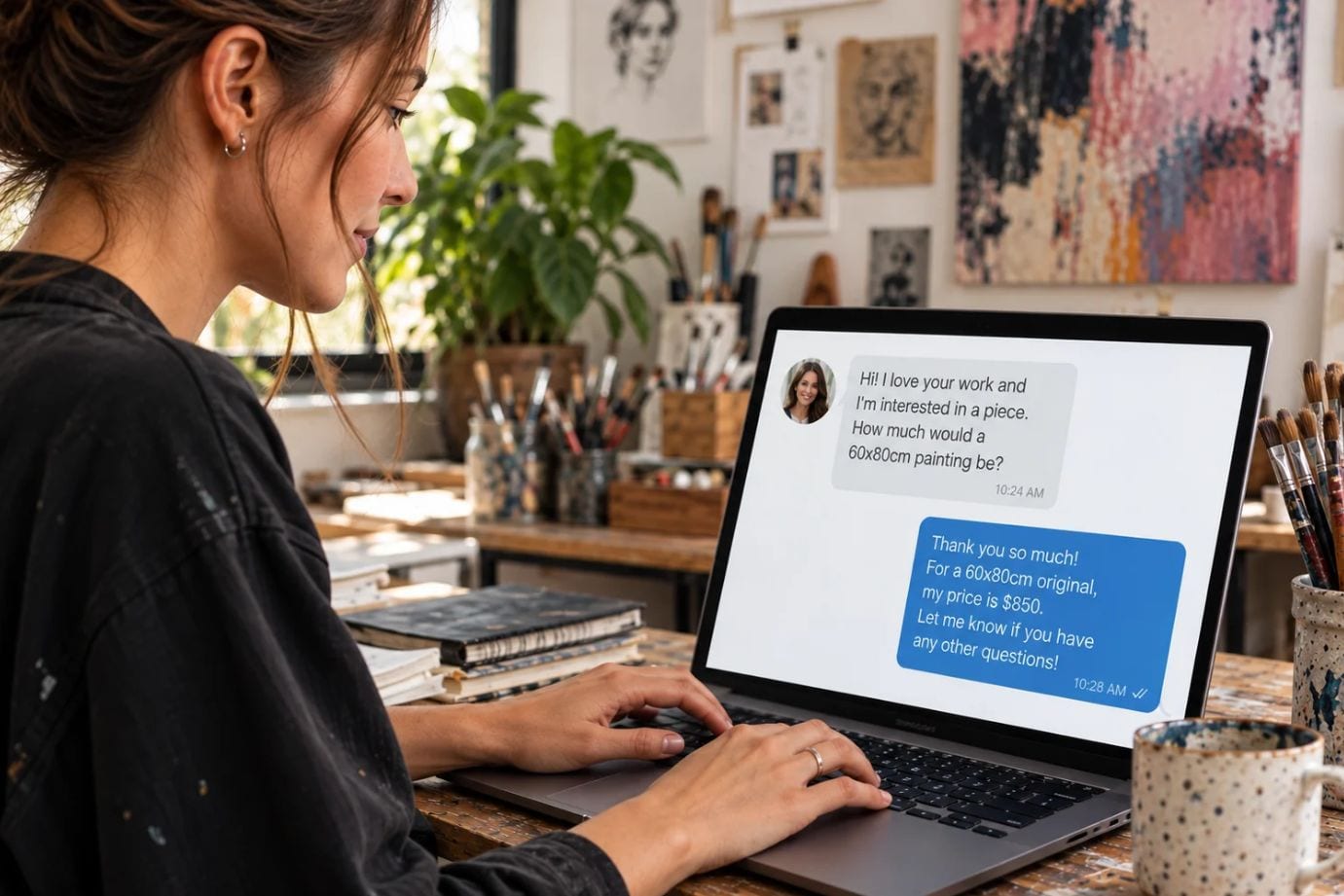
"Would you do it for less?" is one of the most common messages an artist with visible work will receive, often from someone who wouldn't dream of asking a retailer the same question. A few approaches keep this from becoming a drawn-out negotiation every time:
- State the price clearly and don't treat it as a starting offer. A firm, friendly response ("the price is $X, and that reflects the size and materials") closes the door on haggling far more effectively than an ambiguous non-answer.
- Keep pricing visible wherever possible, so the negotiation doesn't happen in private messages where every conversation starts from scratch. This is part of the same consistent pricing structure that should already hold across every sales channel. A public, stable number does more to prevent haggling than any individual reply can.
- Decide in advance whether any discount policy exists (for students, repeat collectors, or specific circumstances), so any exception is a deliberate, consistent choice rather than a case-by-case cave to whoever asks most persistently.
- When a sale does happen through DMs, follow up with a simple written confirmation outside the platform, the same way any direct sale should be documented, regardless of how casually it was negotiated.
Rude Or Dismissive Comments
Public comments that criticize a price, the work itself, or the artist personally sit in a different category than private negotiation, because they're visible to everyone else watching the account. A few principles help:
- Not every comment deserves a response. A dismissive or bad-faith comment often gets more oxygen from a defensive reply than from being quietly ignored or deleted.
- A short, calm response to genuine but harsh feedback, rather than an emotional one, tends to reflect far better on the artist than either silence or a heated reply, especially to onlookers who are watching the exchange rather than participating in it.
- Blocking or restricting repeat offenders is a professional decision, not a petty one. An account is a business asset, and protecting it from a pattern of bad-faith engagement is no different from a shop owner asking a disruptive customer to leave.
- Screenshots and private venting have their place, just not in the account's public replies. Processing frustration with a friend or in a private space keeps the public-facing account calm and professional, regardless of how the exchange actually felt in the moment.
Requests For Free Work
"Exposure," "collaboration," and "featuring you" are three of the most common wrappers around a request for unpaid work, and they can be genuinely hard to distinguish from real opportunities at first glance, especially from an account with a large following. A few questions help sort real opportunities from disguised requests for free labor:
- Is there a clear, specific description of what's being offered in return, or just a vague promise of visibility?
- Would this same request be made of a professional in any other field (a photographer, a designer, a contractor) without expecting them to work for free?
- Does the requester have a track record of paying artists for similar work, or does "exposure" appear to be their standard offer to everyone?
A polite, direct decline ("I don't take on unpaid projects, but I'd be glad to discuss a paid collaboration") closes the door respectfully while leaving room for a legitimate opportunity to come back with a real offer, if one exists.

Setting Boundaries Without Losing Warmth
The concern that boundaries will make an account feel cold or unapproachable is worth taking seriously, because an overly guarded, transactional-feeling presence undermines exactly the kind of trust that makes social media useful for an artist in the first place. The goal isn't to become unreachable; it's to be reachable on clear, sustainable terms.
A few habits keep both things true at once:
- Respond warmly and personally to genuine questions and interest, since that responsiveness is often what turns a follower into an actual collector over time.
- Use consistent, friendly, but firm language for recurring situations: a saved response for pricing questions or collaboration requests means the boundary gets held the same way every time, without needing to be re-negotiated emotionally in the moment.
- Remember that a boundary held calmly and consistently reads as professional, not unfriendly. Most people, including genuine collectors, respect clarity far more than they resent it.
When It's Worth Delegating
For artists whose accounts generate a high volume of these interactions, some of this (initial pricing questions, scheduling studio visits, screening collaboration requests) can be handled by an assistant, gallery, or a structured representation relationship built to manage exactly this kind of front-line communication, freeing the artist to engage personally only where it actually matters: real collectors, real opportunities, real conversations.
From A Well-Managed Account To Real Opportunities
An account that's warm, professional, and clearly boundaried tends to attract better opportunities than one that's either guarded or constantly negotiated down.
Explore AGI Fine Art's current open calls and put that well-managed presence to work in front of curators and collectors actively looking for it.
Get the next article and open calls
A few times a year. Unsubscribe anytime.
Questions? Feedback? Thoughts on this article, or a topic you’d like us to cover?