Is It a Good Moment to Start an Artistic Career?
If you’ve been wondering whether pursuing an artistic career in 2026 makes sense – especially with AI reshaping every industry around you – you’re not alone. This question is on the minds of thousands of young creatives right now. And the answer, backed by real data and market signals, might surprise you.
The Shift Is Already Happening
Something significant is going on in American universities. Fine arts programs at institutions like Pratt Institute, the School of Visual Arts, and Parsons School of Design are reporting record-high application numbers. Parsons alone has seen applications to arts programs rise 64% since 2016. Pratt’s painting and drawing programs – each with annual tuition around $62,000 – have waiting lists and recently enrolled their largest classes in recent history.
This isn’t a coincidence. It’s a generational response to a world in flux.
Why Young People Are Turning to Art – and Away from Safe Careers
For decades, the advice was clear: study law, finance, computer science, or engineering. These were the guaranteed paths to stability and income. But in 2025 and 2026, that certainty has cracked.
Workers aged 22–25 in the most AI-exposed occupations – software developers, junior analysts, paralegals, HR associates – have seen a significant decline in employment since 2022, a trend driven largely by young workers failing to enter those jobs in the first place (Stanford Research / Dallas Fed, January 2026). Goldman Sachs data shows a 16% drop in employment for this age group in AI-exposed roles, even while experienced workers remain stable.
The “safe” career no longer feels so safe. And Gen Z is noticing.
“A lot of my peers understand that nothing is guaranteed really, no matter what you study, so you should just study the thing that matters the most to you,” said Manar Balh, a painting student at Pratt. “AI doesn’t feel like a reason to stop making art. If anything, it’s a reason to keep making and insist on making art.”
The Art Market Is Not Waiting – It’s Growing
While traditional career paths contract, the art world is expanding. 2026 is shaping up to be one of the most dynamic years for the contemporary art market in recent memory.
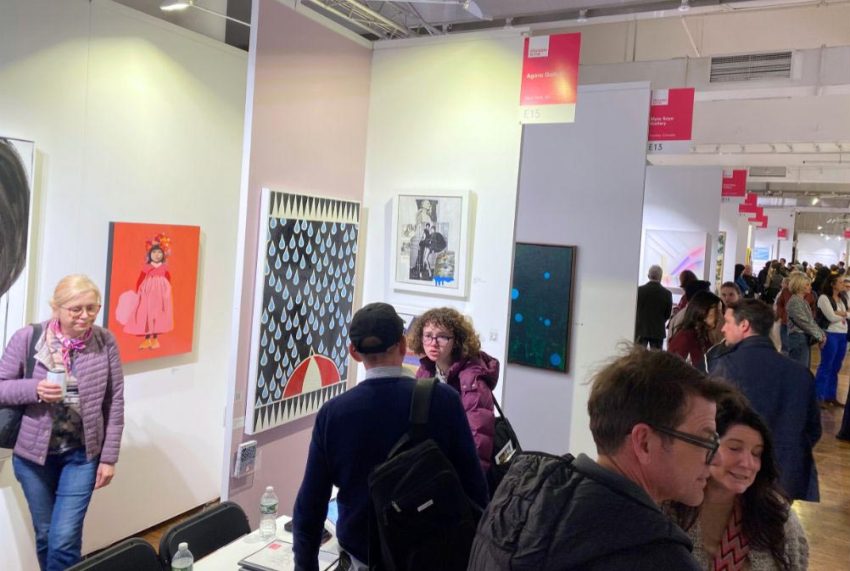
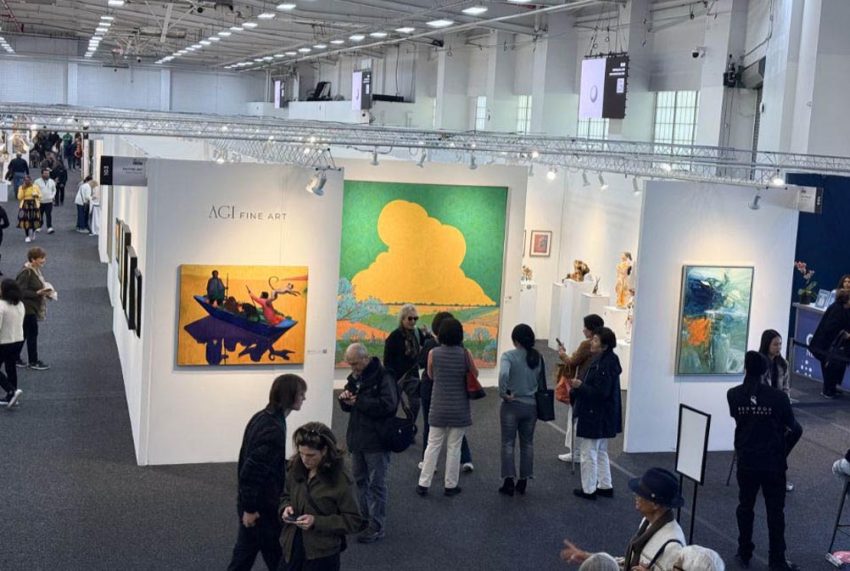
The spring season delivered clear signals: at the Affordable Art Fair in March, sales volumes were notably up, with collectors decisive and eager to acquire. At Artexpo New York in April, foot traffic and acquisition rates were robust. As our colleagues at Agora Gallery have observed, buyers are no longer just looking for established names – they are actively hunting for new talent. The focus has shifted from cautious observation to enthusiastic acquisition, and emerging artists are at the center of that shift.
This is not a niche trend. The Fine Arts Schools industry in the United States has grown at a compound annual rate of 4.3% between 2020 and 2025, reaching an estimated market size of $7.8 billion (IBISWorld, 2025). Demand for creative work – and for the people who make it – is real and rising.
Art and AI: Not a Contradiction, a Conversation
The fear that AI will make human-made art obsolete misreads both technology and culture. What AI cannot replicate is the lived experience, the personal voice, the physicality of a handmade work. In fact, the surge in fine arts enrollment is happening partly because of AI – as a direct response to digital saturation. Students are drawn to material practices, to painting, sculpture, and printmaking, precisely because these things feel irreplaceably human.
“Especially when the world is so unstable and insecure, I think that art is a place of reflection, resistance and imagination,” said Jane South, Fine Arts Chair at Pratt Institute. “It really helps us to make sense of it.”
The art market, meanwhile, is responding to the same impulse. Collectors are increasingly seeking tangible, emotionally resonant works – pieces they can live with, not just trade. Physical art offers something a data asset never will.
So: Is Now a Good Moment?
Yes. But with a critical condition.
The opportunity is genuine – the market is alive, younger collectors are entering it, and galleries are actively looking for emerging voices. But entering the art world without strategy is not the same as entering it with intention. The artists who build sustainable careers are not those who simply make good work. They are those who understand how to position it, where to show it, how to build a professional presence, and when to seek the right guidance.
This means investing time in your practice, yes. But also in your professional identity: your artist profile, your exhibition history, your network, your visibility in the right contexts.
Where to Start
Building an artistic career today requires more than a studio and social media. It requires a real ecosystem: curated exhibitions that put your work in front of collectors and institutions, professional guidance that helps you understand the market, and the right partnerships to move from emerging to established.
At AGI Fine Art, we work with artists at exactly this stage – providing the professional context, curatorial support, and international visibility that transforms a strong practice into a sustainable career.
If you’re ready to take your artistic career seriously, we invite you to explore our current opportunities.
Get the next article and open calls
A few times a year. Unsubscribe anytime.
Questions? Feedback? Thoughts on this article, or a topic you’d like us to cover?