How to Go International with Your Art: Strategic and Practical Steps

For many artists, the idea of showing work internationally feels distant: something reserved for established names with gallery representation and institutional support. In reality, the path to international visibility is more accessible than it seems, but it does require deliberate preparation. This guide walks through the key strategic and practical steps to take your practice across borders.

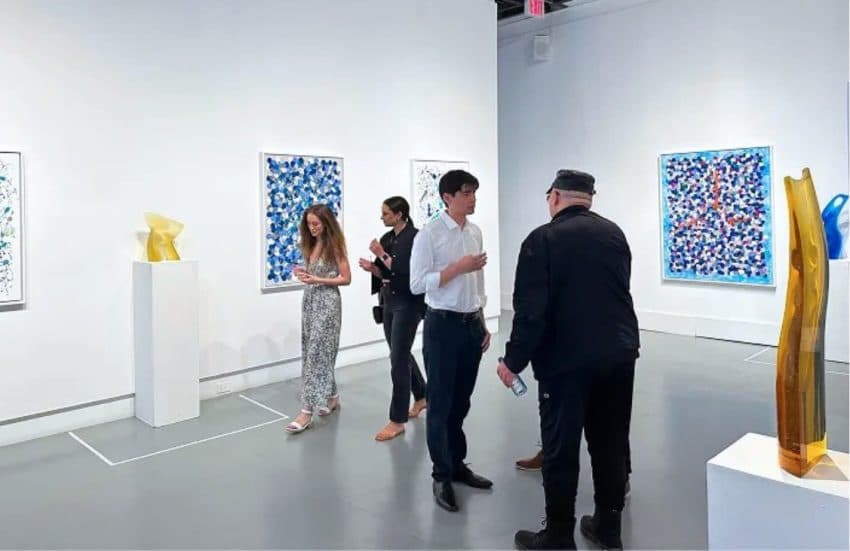
highlighting international contemporary artists.
1. Start with a Clear International Identity
Before thinking about where to show, ask yourself: what does your work communicate to someone who doesn’t know your local context?
An international audience has no reference for your city, your school, or your local reputation. What travels is the work itself: its visual language, its conceptual clarity, and the story you tell about it. This means your artist statement, your biography, and your portfolio must be tightly edited and written in English (the working language of the international art world), regardless of where you are based.
Think of your online presence as your first international exhibition. Your website is often the first thing a curator, gallery director, or collector will see before meeting you in person. It should be clean, current, and easy to navigate, and your images must be high resolution and professionally documented.

2. Research the Right Markets and Contexts
Not every international art market is the same, and not every exhibition context suits every practice. The key is alignment: finding cities, galleries, and events where work like yours already has an audience.
Start by mapping where artists with similar sensibilities are showing. What fairs do those galleries participate in? What cities are those fairs in? This kind of market research takes time, but it builds a realistic and targeted picture of where your work might land well.
Some cities worth monitoring as active international art hubs in 2026 include New York, London, Berlin, Miami, and, increasingly, Lisbon, which has emerged in recent years as a vibrant meeting point between the American, European, and Latin American art worlds.
3. Build an Exhibition Record Strategically
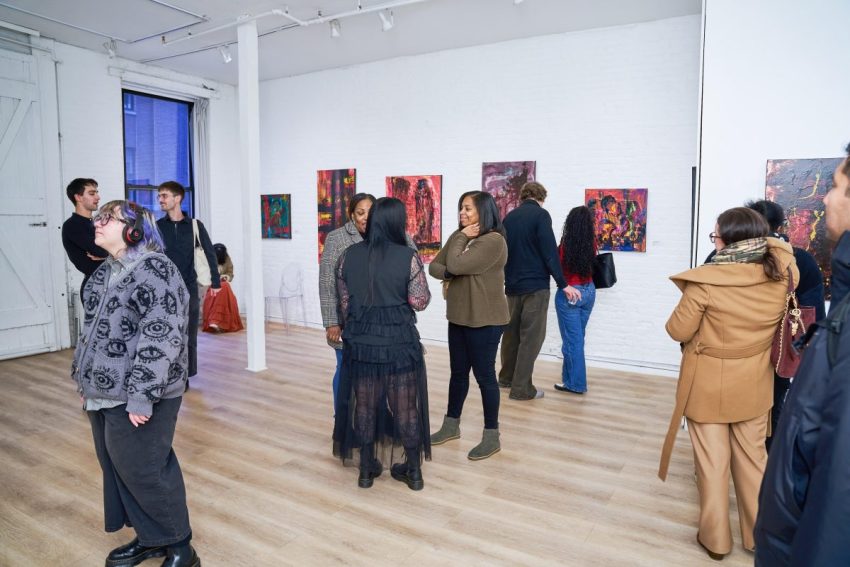
International galleries and fair committees look for artists with a demonstrated track record. Before applying to major international opportunities, it’s worth building your CV through a progression of exhibition experiences: group shows, juried exhibitions, open calls, and pop-up events.
Each exhibition is not just a sales opportunity; it’s a credential, a documentation moment, and a networking event. Approach them as such. Bring cards, maintain contact with other exhibiting artists and with the organizers, and follow up after the show.
If you’re ready to take a serious step toward international exposure, partnering with a gallery that already has an established international presence dramatically accelerates this process. Rather than spending years building those contacts from scratch, you gain immediate access to a curatorial framework, a collector network, and a professional infrastructure.
4. Understand the Logistics of Shipping Art Internationally
This is where many artists stall, and it’s entirely manageable with the right preparation.
Shipping fine art across borders involves several practical layers:
Packaging. Before anything else, your works must be packed to professional standards. This means using glassine, bubble wrap (smooth side against the surface), proper boxing, and cardboard corners for framed pieces. For detailed guidance, our step-by-step packing guide covers everything you need to know: How to Safely Pack Your Paintings for Shipping.
Customs documentation. For shipments to and from countries outside your own, you will need a commercial invoice listing the works, their dimensions, medium, value, and country of origin. If shipping from the US to Europe (or vice versa), your shipper will handle customs declarations, but you must provide accurate documentation. Undervaluing artwork on customs forms is both illegal and counterproductive.
Choosing a shipper. For valuable or fragile work, consider specialist fine art shippers rather than general couriers. Companies like Crozier, Uovo, or Conveyor Arts specialize in handling fine art with climate-controlled vehicles and trained handlers. For smaller or less fragile works, established couriers can work well if packaging is correct.
Lead time. International shipping, particularly customs clearance, can take longer than expected. Build in at least two to three weeks of buffer before any exhibition opening when planning logistics.
5. Prepare for the Exhibition Experience Itself
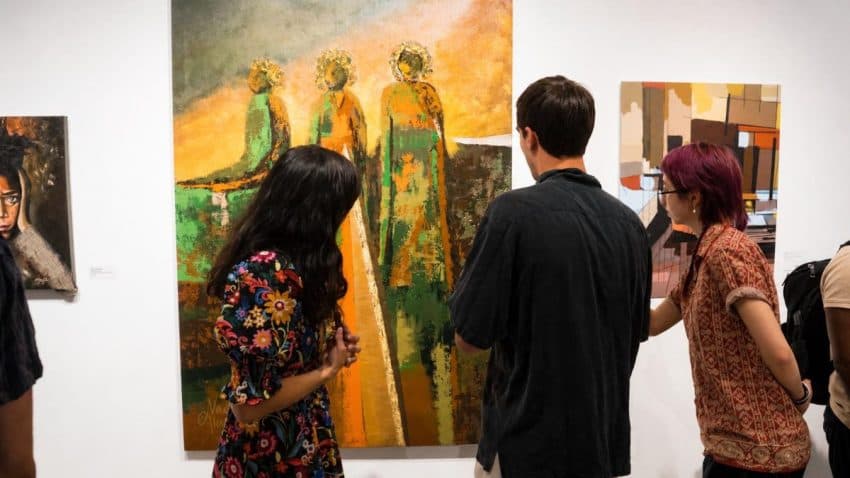
Arriving at an international exhibition is not just about the work on the wall. It’s a professional engagement. If you are able to attend openings, do so: the in-person connections made at an international exhibition are some of the most valuable in an artist’s career.
Prepare materials in advance: printed artist cards, a concise one-page overview of your practice, and a digital portfolio accessible on your phone. Be ready to talk about your work clearly and briefly, not just in artistic terms, but in terms of what it’s about, what drives it, and what makes it distinctive.
Collectors and curators at international events are meeting dozens of artists. What stays with them is usually a combination of strong work and a clear, memorable conversation.
6. Follow Up and Build Long-Term Relationships
The mistake many artists make after an international show is to treat it as a one-off event. International careers are built through continuity: staying in touch with gallery contacts, following the work of curators and collectors you’ve met, and returning to the same markets over time.
Document every show thoroughly: professional installation photographs, press coverage, collector contacts. Each exhibition builds the foundation for the next.
A Concrete Opportunity: Intersections, Lisbon, 2027
If you are looking for a first, or next, international step, AGI Fine Art is organizing Intersections, a curated group exhibition taking place in Lisbon next year.
Lisbon has become one of the most compelling art destinations in Europe: an international audience, an evolving gallery scene, and a city that attracts collectors, curators, and cultural institutions from across Europe, the Americas, and beyond. For artists looking to establish a presence in the European market, it represents a timely and strategically sound opportunity.
Intersections is designed for artists whose work engages with dialogue, between cultures, disciplines, materials, or ideas. It is curated, professionally managed, and supported by AGI Fine Art’s full exhibition infrastructure, including logistics coordination, promotion, and collector engagement.
Applications are now open.
Related reading: How to Safely Pack Your Paintings for Shipping · All About Pop-Up Exhibitions · How to Get Into the Art World
Get the next article and open calls
A few times a year. Unsubscribe anytime.
Questions? Feedback? Thoughts on this article, or a topic you’d like us to cover?