How to fairly price artwork: guidelines and methods
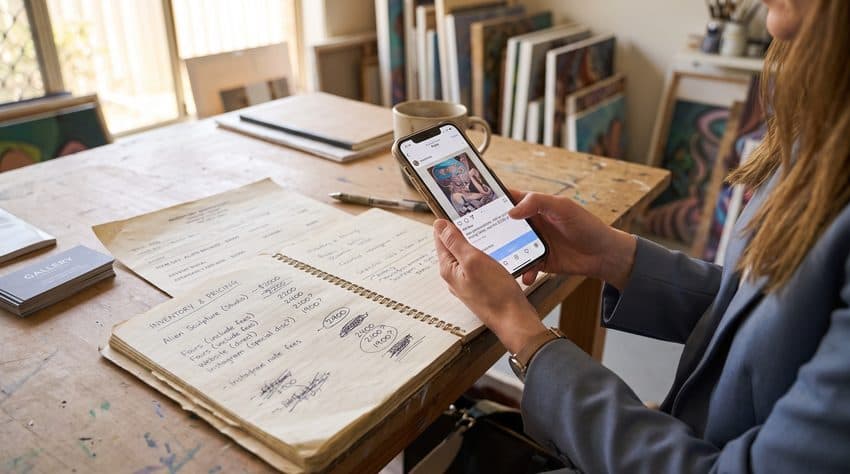
Pricing artwork is one of the most consequential decisions an artist makes, and one of the least discussed with honesty. The number attached to a piece is not just a transaction figure. It is a statement about where an artist stands in the market, who they are speaking to, and how seriously they expect to be taken.
There is no universal formula. But there is a logic, one that becomes clearer when you understand the variables at play and how experienced artists and agencies approach them.
The Two Positions: Confidence and Discovery
Artists who have been working for some time often arrive with prices already in mind. They know what their work has sold for, how buyers in their circle respond, and what comparable artists in their medium command. That clarity is an asset, and it should be respected. A defined price history is a signal of an established market presence.
Others (including talented, serious artists with strong bodies of work) have never had to set prices in a professional exhibition context, or are entering a new market for the first time. For them, pricing becomes an act of research and positioning rather than memory.
Both positions are legitimate. The difference is not about quality or ambition. It is about where you are in building your market.
What Determines Value in the Art Market
Before arriving at a number, it helps to understand what the market actually responds to. Several factors shape how a work is perceived, and priced, by informed buyers:
Career stage and exhibition history. An artist with a consistent record of exhibitions, art fair participation, and professional representation commands different prices than one who is just beginning to build that record. Prices should reflect where you genuinely are in that trajectory, not where you hope to be.
Medium and material costs. Large-scale sculpture, works on linen, or pieces requiring specialized materials carry costs that reasonably factor into price. A work on paper and a work on canvas of the same dimensions will often be priced differently, and buyers generally understand why.
Size. Scale is one of the most straightforward variables. Larger works command higher prices, all else being equal. Many artists develop a consistent per-square-inch or per-centimeter rate for works in a given series, which provides internal coherence across a body of work.
Consistency across venues. This point is critical: the price of a work should not vary depending on where it is being sold. An artist who sells from their studio at lower prices than they charge through professional channels undercuts both their own market and the credibility of their pricing.
Explore the practical mechanics of calculating consistent prices
Reputation signals. Prizes, press, institutional acquisitions, and presence at recognized fairs are not vanity metrics; they function as market signals that justify price increases. When these milestones occur, prices should move accordingly.
The Role of Market Research
No artist prices well in isolation. Understanding what comparable artists charge (in terms of medium, scale, career stage, and venue) is essential groundwork.
Look at what is actually selling, not just what is being listed. Sale prices at auction, reported fair sales, and the pricing of artists at a similar stage in recognized programs give you a realistic range. Artists who are consistently priced above their peers without the credentials to justify it tend to sell less. Those who price below where they belong tend to attract buyers who will not follow them upward as their career grows.
The goal is to find the price at which your work is taken seriously by the buyers and institutions you want to reach, neither so high that it creates resistance, nor so low that it signals uncertainty about your own practice.
When and How to Raise Prices
Prices should rise, but gradually, and tied to genuine developments in an artist’s career. Raising prices arbitrarily, or in large sudden jumps, tends to disrupt the confidence of existing collectors and create friction with new buyers.
Reasonable triggers for a price increase include: consistent sell-through at current prices over an extended period, participation in a significant art fair or institutional exhibition, meaningful press coverage, or the addition of a professional agency or representative. A general guideline: if you are selling more than half your inventory within a year at a given price point, the market is telling you there is room to move upward.
Increases of 10–25% are sustainable and defensible. Larger jumps require proportionally stronger justification.
Pricing for Exhibitions and Art Fairs
The context of a professional exhibition or art fair introduces additional considerations. Works need to be priced not only in relation to your own history, but in relation to the overall presentation, and to the expectations of buyers who visit that specific venue.
Experienced agencies and advisors who work closely with exhibition venues understand these dynamics well. They know what buyers at a given fair are accustomed to spending, which price points tend to generate the most serious inquiries, and how an artist’s work positions itself within the broader context of the show.
For artists entering this environment for the first time, or presenting in a new market, that perspective is genuinely useful. Not as a constraint on artistic autonomy, but as market intelligence that helps ensure the work lands where it deserves to.
Price as a Long-Term Instrument
The most important thing to understand about pricing is that it is not a one-time decision. It is an ongoing instrument of career strategy. A price set too high early on can be difficult to walk back. A price set with discipline and coherence from the beginning builds a market that can grow with you.
Artists who approach pricing with the same seriousness they bring to their studio practice tend to build more stable, sustainable careers, because their market reflects the integrity of their work.
For a practical breakdown of pricing methods, formulas, and how to calculate rates for commissioned work, see our detailed guide:
If you feel ready to present your art beyond the studio, we invite you to explore AGI Fine Art’s current open calls. From curated exhibitions to international art fairs, these opportunities are designed to connect artists with new audiences, collectors, and professional platforms.
Your pricing strategy is part of your professional foundation. The right opportunity can be the next step in building upon it.
Get the next article and open calls
A few times a year. Unsubscribe anytime.
Questions? Feedback? Thoughts on this article, or a topic you’d like us to cover?