How to Identify and Avoid Art Frauds
Updated for today’s art market
The digital age has transformed the way artists share their work, connect with collectors, and build international careers. With just a few clicks, artists can promote their portfolios worldwide, apply for exhibitions, and access opportunities that once seemed unreachable.
However, this accessibility comes with risks.
The same tools that help artists grow their visibility have also created fertile ground for scams, fraudulent agencies, and misleading offers targeting creatives, especially emerging artists.
Art fraud is not new, but it has become more subtle, professional-looking, and persuasive. Knowing how to recognize red flags is now an essential skill for anyone navigating the contemporary art world.
Why the Art World Is a Target for Scams
Artists are often approached with promises of:
- international exposure
- gallery representation
- art fairs or prestigious exhibitions
- collectors “ready to buy”
These offers can be extremely tempting, especially when visibility, validation, and career growth are involved.
At the same time, the increasing visibility of record-breaking art sales has positioned art as an attractive financial market. Where there is money, there are opportunists.
Scammers often assume artists will:
- be eager for promotion
- skip background checks
- feel flattered and act quickly
Being cautious does not mean being cynical; it means protecting your work, your money, and your reputation.

Common Red Flags to Watch For
While scams constantly evolve, their patterns rarely change.
Here are some warning signs that should immediately raise concerns:
1. Offers That Sound Too Good to Be True
If a company promises guaranteed sales, instant fame, or “exclusive” opportunities without effort or selection, pause. Legitimate art opportunities never guarantee outcomes.
2. Lack of Verifiable Contact Information
Be wary if:
- there’s no physical address
- phone numbers don’t work
- emails come from generic domains
- the domain registration is hidden or very recent
Transparency is a basic requirement for legitimate businesses.
3. Overly Aggressive or Pushy Communication
Pressure tactics are a classic scam technique:
- “Limited time offer”
- “Final spot available”
- “Immediate payment required”
Professional organizations do not rush artists into decisions.
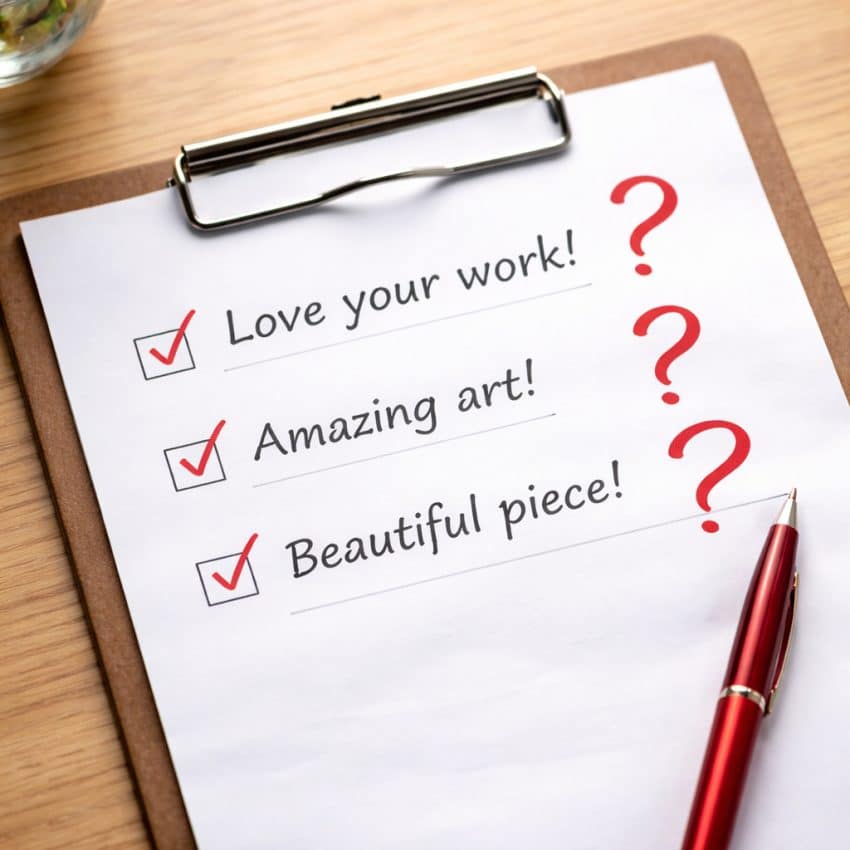
4. Generic or Vague References to Your Work
If someone praises your art but:
- uses vague language
- misidentifies your style
- clearly hasn’t looked at your portfolio
…it’s a sign the message may be part of a mass outreach.
5. Individuals Who Are Impossible to Verify
Always check:
- LinkedIn profiles
- team pages on official websites
- online mentions or interviews
If the person contacting you seems to exist only via email, be cautious.
How to Verify If a Business Is Legitimate
If you’re unsure, take a step back and investigate.
Check Business Registration and Domain History
Look for official registration indicators (LLC, Inc., Ltd., etc.) and perform a WHOIS domain search to verify:
- how long the website has existed
- who owns it
Newly created domains combined with big promises are a red flag.
Use Independent Trust Sources
In the U.S. and Canada, you can check the Better Business Bureau database for registered companies and reviews.
(Keep in mind: BBB applies only to North America.)
Also verify claimed affiliations directly on the partners’ official websites.
Do a General Online Search
Search the company name + words like:
scam, fraud, review, complaint
Artists often share experiences in forums, blogs, or comment sections, and patterns emerge quickly.
Ask for a Second Opinion
When in doubt:
- contact a gallery professional
- speak with other artists
- consult a legal advisor
A short conversation can save you months of stress and financial loss.

What to Do If You Suspect a Scam
If you believe you’ve been targeted or affected:
- Protect your assets immediately
Contact your bank or credit card provider if financial information was shared. - Collect and preserve evidence
Save emails, contracts, invoices, receipts, tracking details, and screenshots. - Report the fraud to the appropriate authorities, such as:
- Federal Trade Commission
- Internet Crime Complaint Center
- U.S. Postal Inspection Service
- Local police or consumer protection agencies
- Seek legal advice
Even a brief consultation can clarify your rights and options. Many organizations offer low-cost or pro bono legal support for artists.
A Final Word for Artists
Being an artist today also means being a professional.
Curiosity, openness, and ambition are strengths, but they must be balanced with critical thinking. Ask questions. Take your time. Legitimate opportunities will still be there tomorrow.
Precaution is not fear. It’s awareness.
Think You Might Have Encountered an Art Scam?
If you’ve received a suspicious offer or believe you may have been targeted by a fraudulent agency, we invite you to contact us.
While we cannot provide legal advice, we review these cases carefully and can help you understand whether further steps or professional support may be needed.
Get the next article and open calls
A few times a year. Unsubscribe anytime.
Questions? Feedback? Thoughts on this article, or a topic you’d like us to cover?