How Your Studio Space Shapes the Art You Make
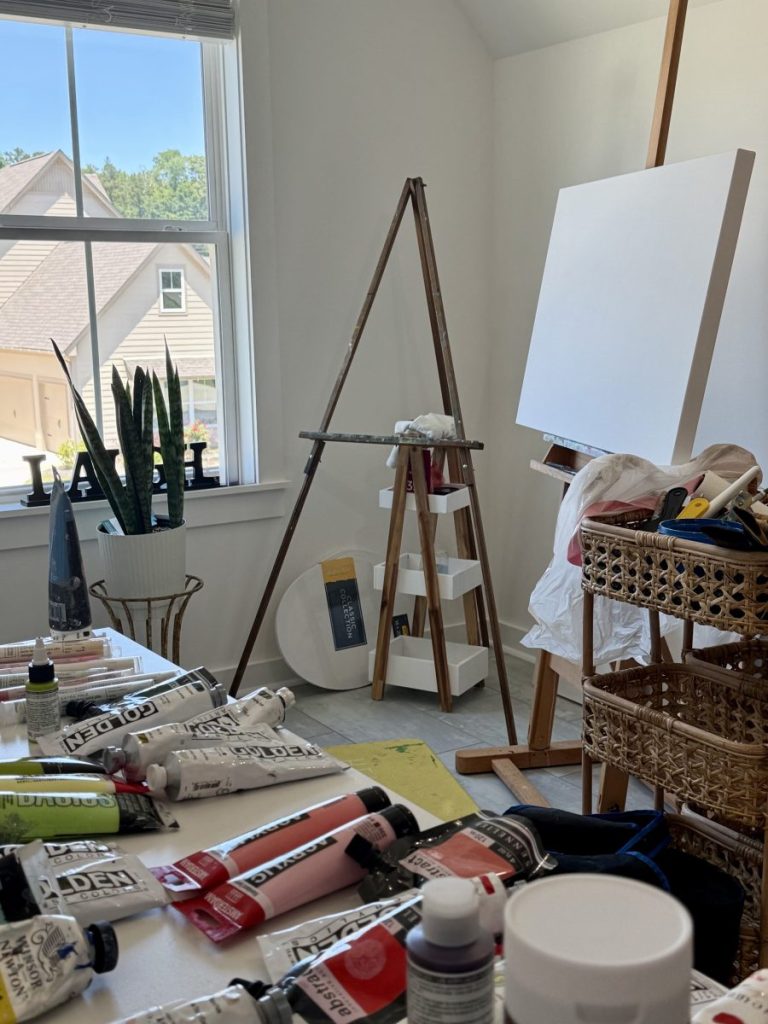
There is a version of the artist’s studio that lives in the cultural imagination: vast, light-filled, paint-splattered floors, canvases stacked against every wall. It’s a compelling image. It’s also, for most working artists, entirely fictional.
The reality is more varied, more personal, and in many ways more interesting. Artists make work in kitchens, in spare bedrooms, in corners of living rooms, in converted garages. The space changes over time (sometimes by necessity, sometimes by choice) and so does the work made within it.
What doesn’t change is the relationship between the two.
The Studio as Creative Infrastructure
Ask any artist about their workspace and you’ll hear practical concerns first: natural light, enough room to step back from a canvas, surfaces that can be cleaned. These things matter. A cramped or poorly lit space creates friction that accumulates over time: small frustrations that quietly erode the conditions for deep work.
But the studio is more than logistics. It is also the environment that holds the creative self in place. The objects on the walls, the tools within reach, the view from the window, all of it contributes to a specific quality of attention. The studio is where an artist returns, day after day, to do the work. That repetition builds something: a relationship between the person and the place that shapes not just how work gets made, but what work gets made.
Starting Where You Are
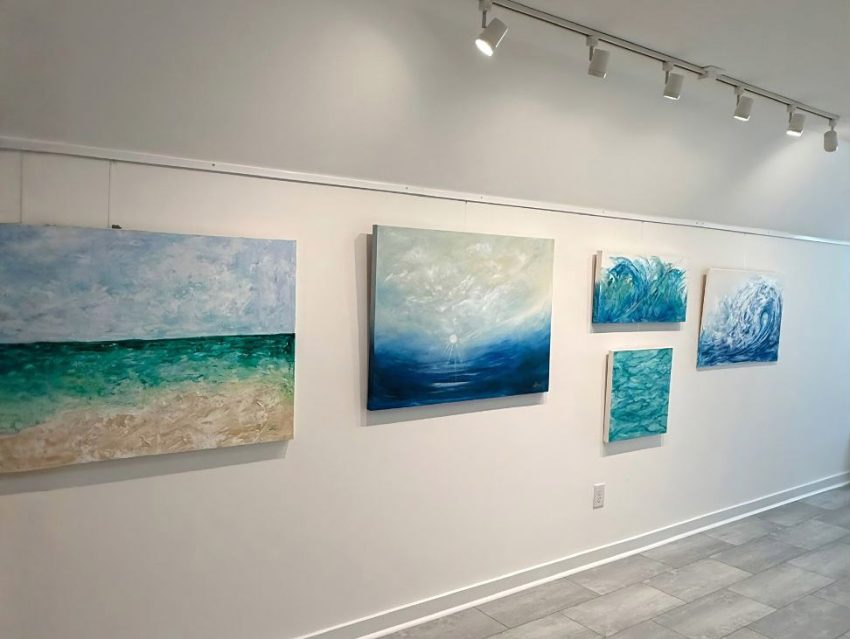
Sherri Springer, an artist whose practice is rooted in abstract painting (alongside impressionistic florals, landscapes, and cityscapes) began her practice in 2019 across a wide range of subjects and styles. She started in her late father’s bathroom suite: a large room with generous windows and good natural light. From there, she moved through kitchens and dining rooms in various apartments and rentals, adapting her practice to whatever space was available. When she lived in Florida full-time between 2020 and 2023, coastal abstraction became a central thread in her work. Since returning to her home state of Alabama in 2023, her focus has shifted: florals, landscapes, and cityscapes have taken over, with coastal work appearing mainly on commission.
It’s a trajectory many artists will recognize. The work doesn’t wait for ideal conditions. When the impulse to create is strong enough, it finds its way into whatever room is available.
“When you are very moved and inspired to create,” Sherri reflects, “you can do it in a number of settings and spaces.”
This is worth sitting with. The studio matters, but it is not a prerequisite. The practice comes first. The space follows.
When the Space Finally Fits the Work
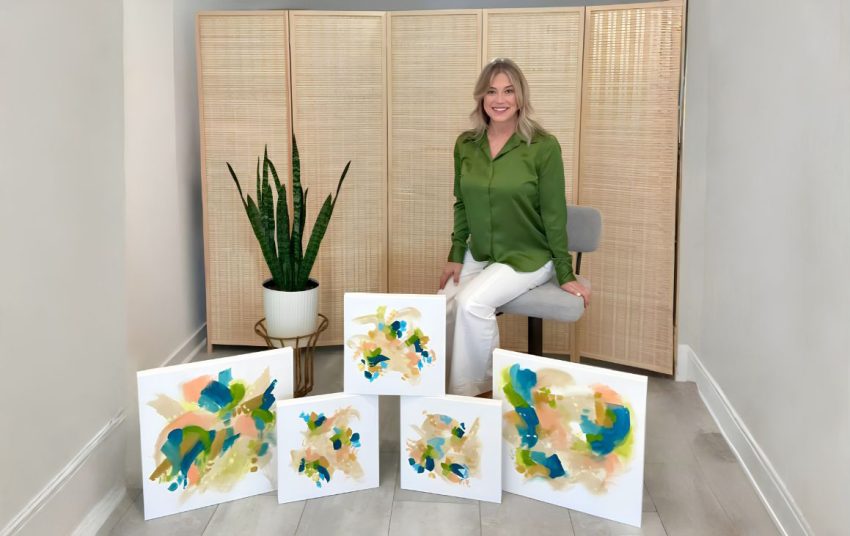
In late 2021, Sherri moved into a dedicated home studio, and with it, the room to work large. Bigger canvases, bigger gestures, a different scale of decision-making. More recently, a new build-out has given that practice an even more intentional home.
The difference isn’t just physical. More space means larger canvases, which means a different relationship with the work: bigger gestures, more movement, a different scale of decision-making. For an artist whose practice is grounded in abstraction, the new studio opened up possibilities that simply hadn’t existed before, including the ability to work on multiple pieces simultaneously, something that’s already pointing toward new collection.
“I have a renewed desire to paint all these new ideas that have been circulating around in my brain,” she says.
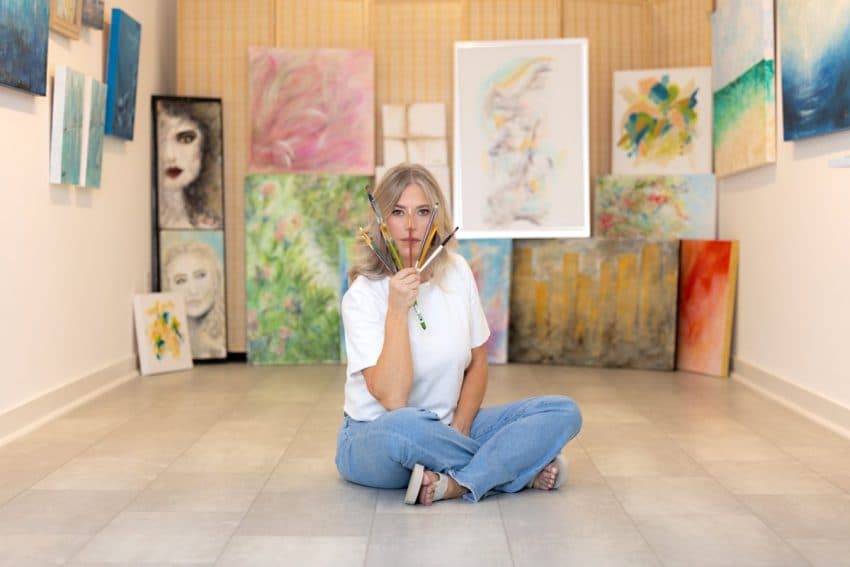
The new studio is also, deliberately, more than a workspace. Sherri has hung her coastal paintings across the walls, a private showing she’s called “Beach House.” A few pieces she keeps simply for herself, not for sale: sentimental anchors in the room. And at the center of it all, her mother’s easel: a keepsake that makes the space feel connected to something larger than any single painting.
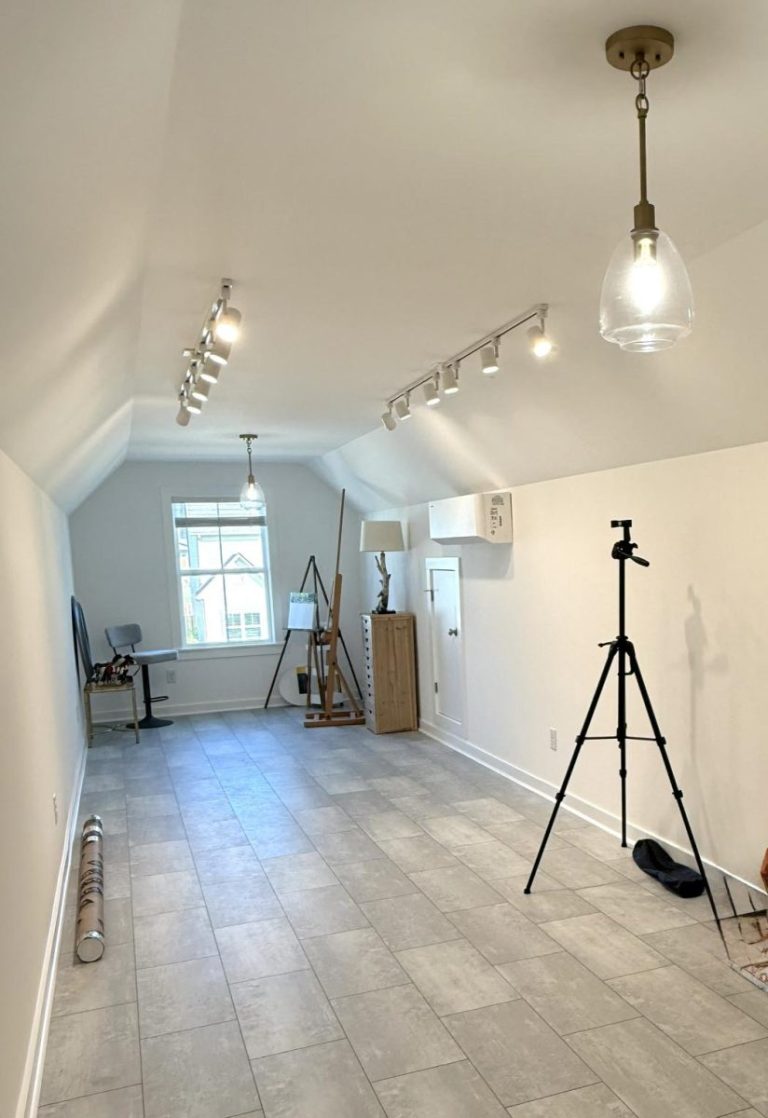
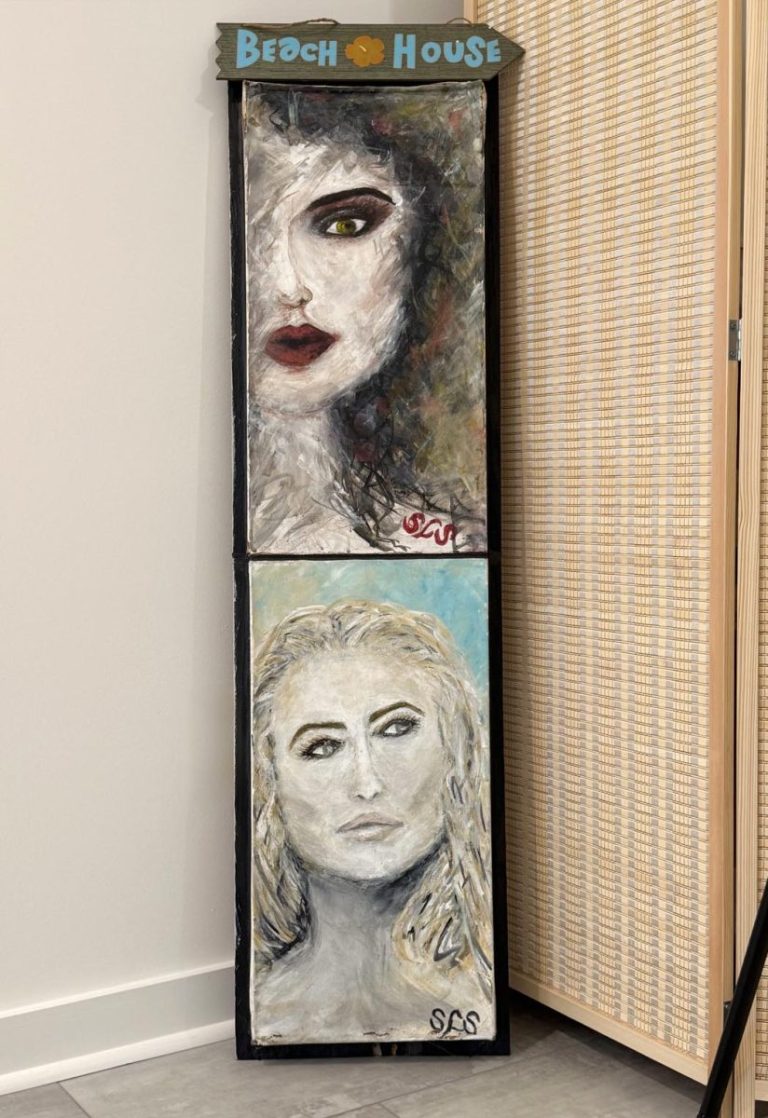
“I sprinkled in a few nostalgic items that warm the space, reminding me of how special this gift of painting is.”
Sherri Springer
Structure, Time, and the Meaning of Showing Up
One of the things Sherri mentions with characteristic candor is the challenge of studio time. After twenty years as a corporate receptionist (a role built around people, interaction, and the rhythm of an office) the solitude of the studio has been an adjustment, not a given.
“A specific routine is really not something I easily carried with me from the office environment into this new career,” she says. It’s an honest admission, and one many artists will quietly recognize in themselves.
The social side of her former work life is something she genuinely misses. As someone who describes herself as a people person, Sherri has had to learn to balance the outward energy of being around others, whether for work or simply for the pleasure of it, with the inward focus that painting demands. The studio requires solitude. That’s not always easy when connection is part of how you’re wired.
But the new studio is also, in her words, a place to look forward to. A space that might help build the very habits she’s working on. “I’m certainly looking forward to strengthening that aspect and the time I will spend in the new studio,” she says. It’s not a resolved story; it’s an ongoing one. Which, for most working artists, is exactly how it goes.
Space as Part of the Story
Sherri Springer will be exhibiting new work as part of Summer City Idyll with AGI Fine Art in July, a show that, in many ways, reflects exactly the kind of creative renewal that a new studio can bring.
Her work is a reminder that the conditions we create for ourselves (the spaces we inhabit, the objects we surround ourselves with, the routines we build) are not separate from the art. They are part of it.
Interested in resources, exhibition opportunities, and insights for working artists? Subscribe to the AGI Fine Art newsletter and stay connected to what’s happening in the art world.
Get the next article and open calls
A few times a year. Unsubscribe anytime.
Questions? Feedback? Thoughts on this article, or a topic you’d like us to cover?