Is Agora Gallery a Vanity Gallery? Here’s What Artists Should Really Know

If you’ve searched for opportunities in the art world, chances are you’ve seen mixed opinions about different representation models. Here’s a clear, factual breakdown of what Agora Gallery actually does, and why the “vanity gallery” label doesn’t apply.
Where the Confusion Comes From
Artists often receive conflicting messages online: some platforms strongly oppose any model that includes fees, while others highlight hybrid or service-based approaches.
This debate becomes especially noisy with well-known galleries like Agora, where visibility and longevity attract both praise and criticism.

The issue is that many of the negative commentaries circulating today:
- were written years ago and never updated
- come from writers with direct commercial interests (PR agencies, online directories, consultants)
- lump all fee-based models into a single category (“vanity galleries”)
- ignore the actual work Agora provides
To understand whether the label fits, we need to consider what vanity gallery truly means, and what Agora actually offers.
What “Vanity Gallery” Really Means, and Why It Doesn’t Apply
A vanity gallery is typically defined as:
- charging artists only for wall space
- offering little to no professional support
- having minimal curatorial standards
- using a “pay-and-hang” approach with no marketing, guidance, or long-term value
Agora’s model is the opposite.
Agora Gallery operates as a service-based gallery: artists receive a structured program that includes curation, installation, professional documentation, marketing, collector outreach, communication guidance, and post-exhibition follow-up.
This is the same model used by:
- art fairs
- co-op galleries
- art marketing agencies
- PR firms
- hybrid representation programs
In these settings, fees support tangible services, not vanity exposure.

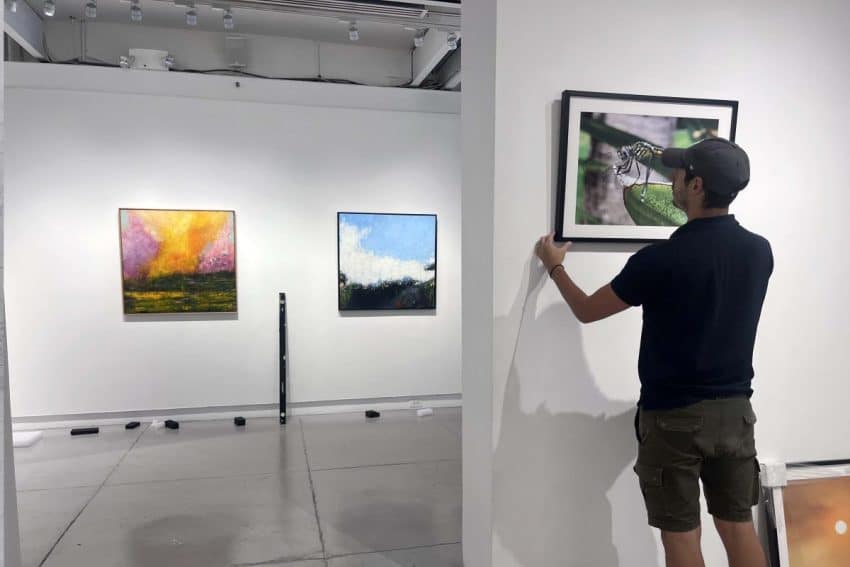
showcasing professional support, curation, and community engagement.
What Artists Actually Receive at Agora Gallery
Here are the core services provided to represented artists:
Professional Exhibition Production
- curation and selection
- installation by trained staff
- opening reception
- collector and press outreach
Marketing and Promotion
- press releases and media distribution
- email marketing campaigns
- dedicated social media promotion
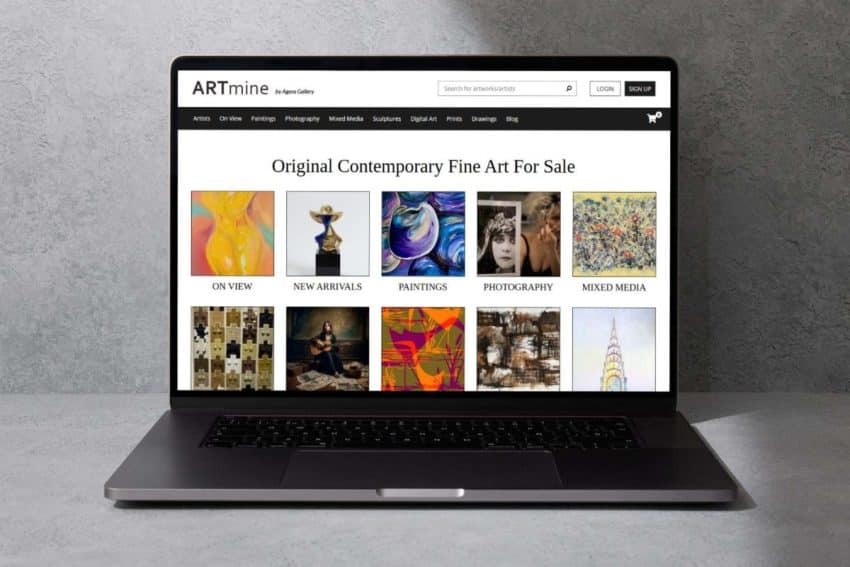
- exposure on ARTmine
Career Development Support
- portfolio guidance
- communication and presentation strategies
- long-term visibility beyond the exhibition
This structure is simply not compatible with the definition of vanity gallery.

Transparency: The Key Difference
Another important distinction:
Agora discloses fees upfront, explains exactly what they include, and never pressures artists to participate.
Artists know from the beginning:
- what services they are paying for
- how the exhibition is produced
- how marketing support works
- what results to expect
This transparency is one of the strongest indicators that the gallery operates ethically and professionally.
Why This Conversation Matters for Artists
The art world is diverse, and so are the business models inside it.
Artists benefit from understanding what each model offers, rather than relying on outdated or biased summaries.
When evaluating any gallery or program, ask:
- What services are included?
- Is there transparency in how the gallery operates?
- Does the team provide real support?
- Is the fee tied to measurable work?
In Agora’s case, the answer to all four is yes.

Want to See the Full Picture?
If you want a deeper explanation of how Agora works and what differentiates its service-based representation model, we recommend reading:
Agora Gallery’s Model Explained: Transparency, Services, and What Makes Us Different
Understanding the nuances of representation helps artists make informed, empowered decisions, and ensures that good opportunities aren’t dismissed because of misconceptions.
Get the next article and open calls
A few times a year. Unsubscribe anytime.
Questions? Feedback? Thoughts on this article, or a topic you’d like us to cover?