Feminism in Art: How It Started vs. How It’s Going
The history of women in art is a history of persistence. For centuries, the “female perspective” was often confined to the role of the muse or the subject, while the creator remained in the shadows. To understand where we are today, we must look at the path carved out by those who refused to stay silent.
How It Started: The Pillars of Resistance
The journey didn’t begin in the 1960s; it began whenever a woman claimed her right to the canvas. Artemisia Gentileschi, in the 17th century, was one of the first to shatter the glass ceiling of the Baroque era, using her mastery of Caravaggiesque light to depict women not as passive victims, but as powerful, decisive protagonists.
By the mid-20th century, the dialogue shifted toward internal identity and raw emotion. Frida Kahlo proved that the domestic, the biological, and the psychological were subjects worthy of high art, moving the feminist dialogue into the realm of radical self-expression.


The New York Revolution: The Ninth Street Women
As the art world’s center shifted to New York City in the 1950s, a new generation of women began to redefine the limits of the canvas. Figures like Lee Krasner and Joan Mitchell, part of the legendary “Ninth Street Women”, battled for recognition within the hyper-masculine circle of Abstract Expressionism. They proved that a woman’s gesture could be just as bold, large-scale, and intellectually rigorous as any man’s. Their presence in the downtown NYC scene laid the essential groundwork for the 1970s revolution, where artists like Judy Chicago began using “domestic” materials to challenge the male-dominated hierarchy of “High Art.”
How It’s Going: Complexity, Agency, and Mastery
Today, the conversation has moved from demanding a seat at the table to redefining the entire room. Contemporary women artists are no longer defined solely by their struggle; they are defined by their mastery and their ability to blend social critique with high-level aesthetics.
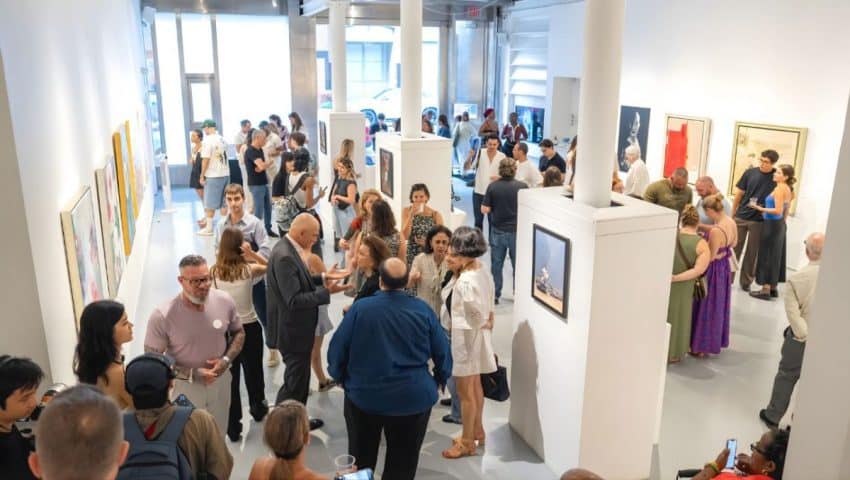
At AGI Fine Art, we see this “new era” of feminism reflected in artists who use their heritage and personal narratives to command international attention.
Reclaiming the Narrative: Cabell Molina & Angie Kiehne
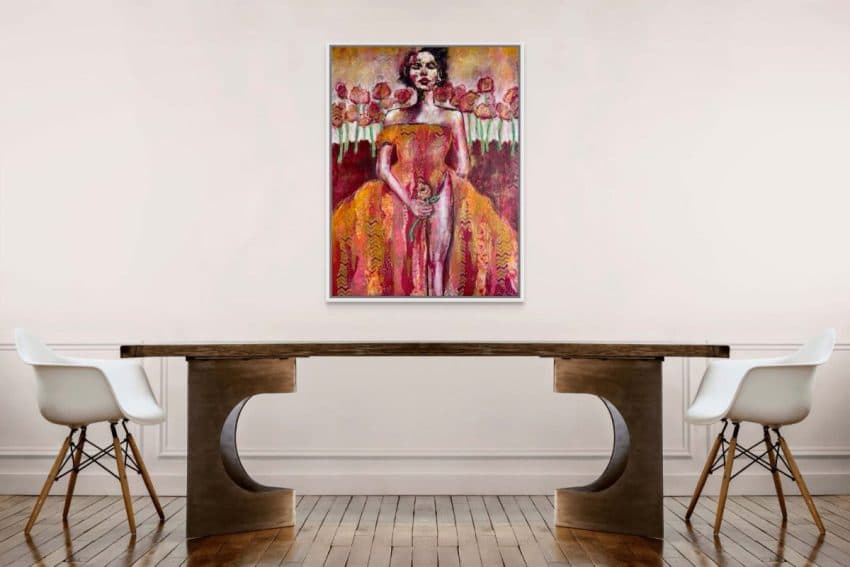
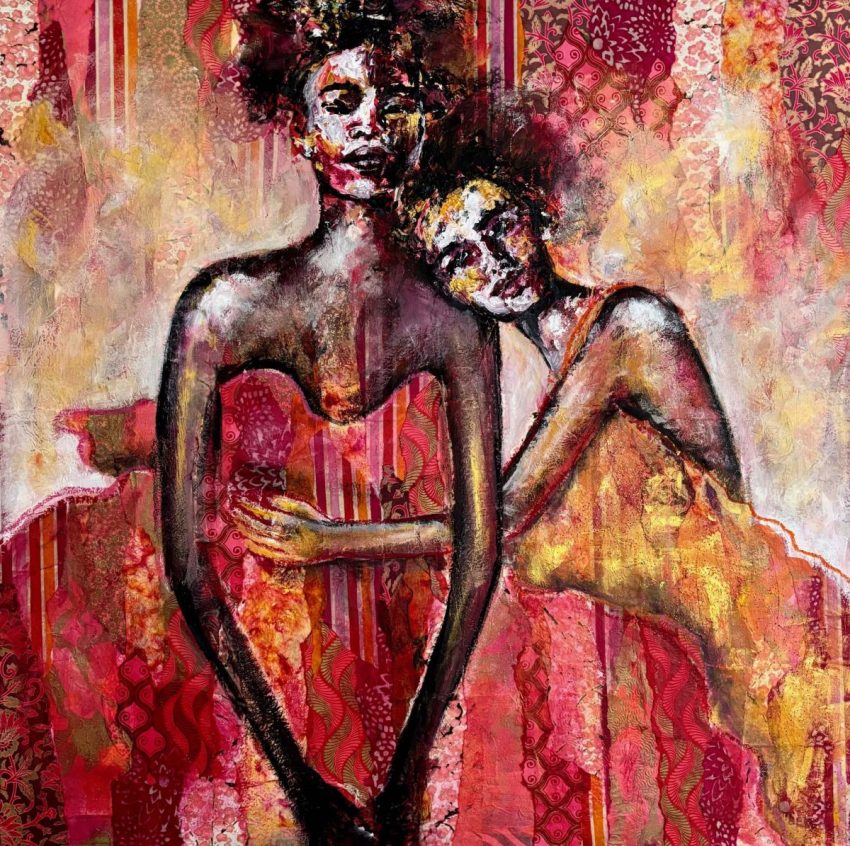
The spirit of historical reclamation lives on in the work of Cabell Molina. Featured at Red Dot Miami 2025 and currently on view in Agora Gallery’s exhibition, Florals for Spring, Groundbreaking! Molina uses mixed-media assemblage, incorporating materials like wallpaper and fabric linked to domesticity, to construct figures that are “unapologetic and unafraid to take up space.” Her work is a direct response to the silent restraint of past generations.
Similarly, Angie Kiehne (ArtExpo New York 2025) uses the medium of collage to spark modern feminist discourse. Her work, infused with contemporary satire and irreverent humor, challenges societal norms much like the pioneers of the 70s, but with a bold, modern creativity that demands immediate dialogue.
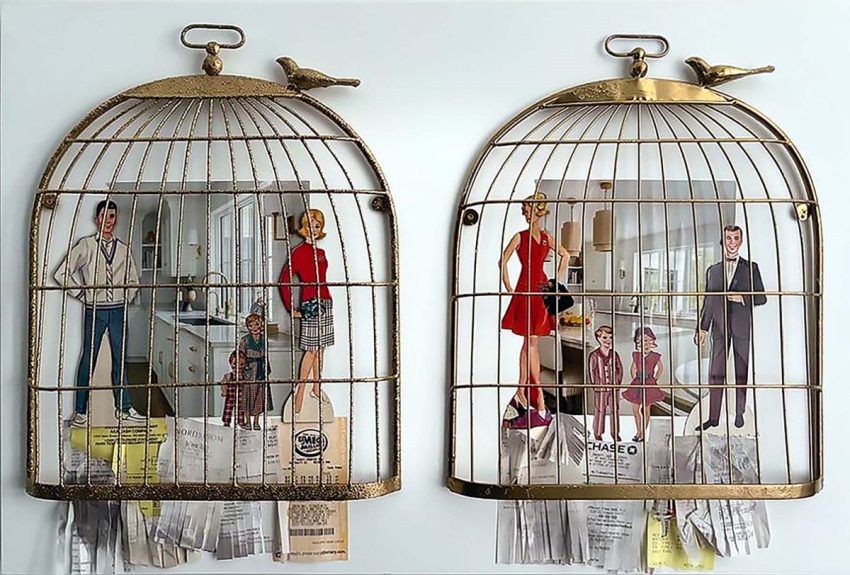
2024, mixed media on masonite board
24 x 36 ″
Internal Strength and Global Vision: Dijana Tuzlic & Krystal Madej
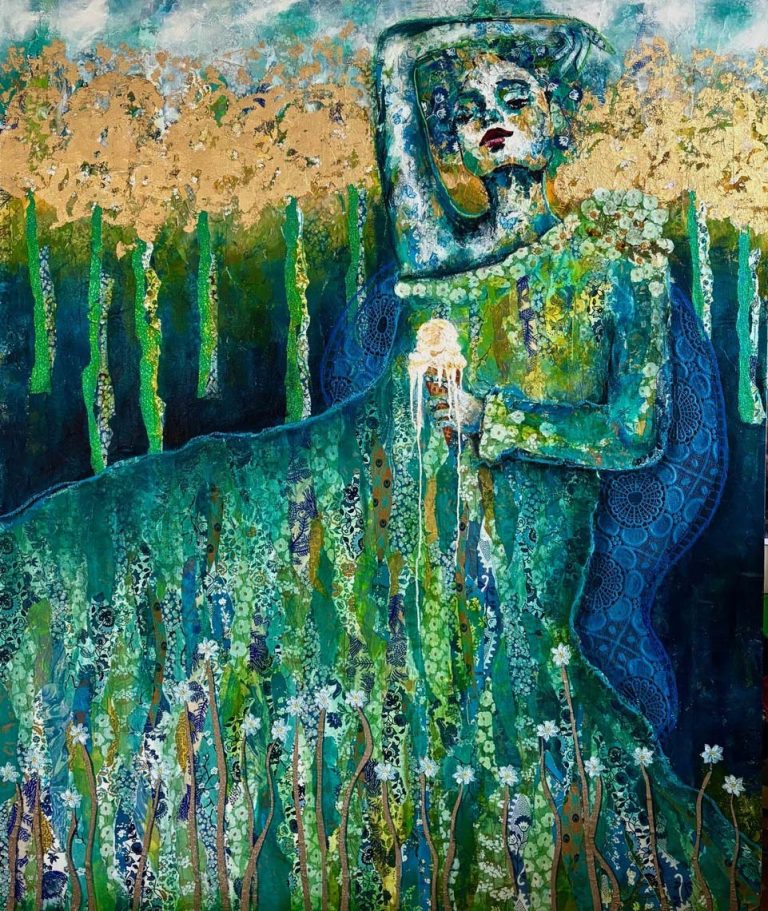
The evolution of the movement is also visible in the exploration of autonomy and healing. Dijana Tuzlic (ArtExpo New York 2026) avoids objectifying the female figure, focusing instead on “confidence, drama, and quiet charm.” Her subjects are self-possessed, using metaphors of water and light to explore intimacy and strength.
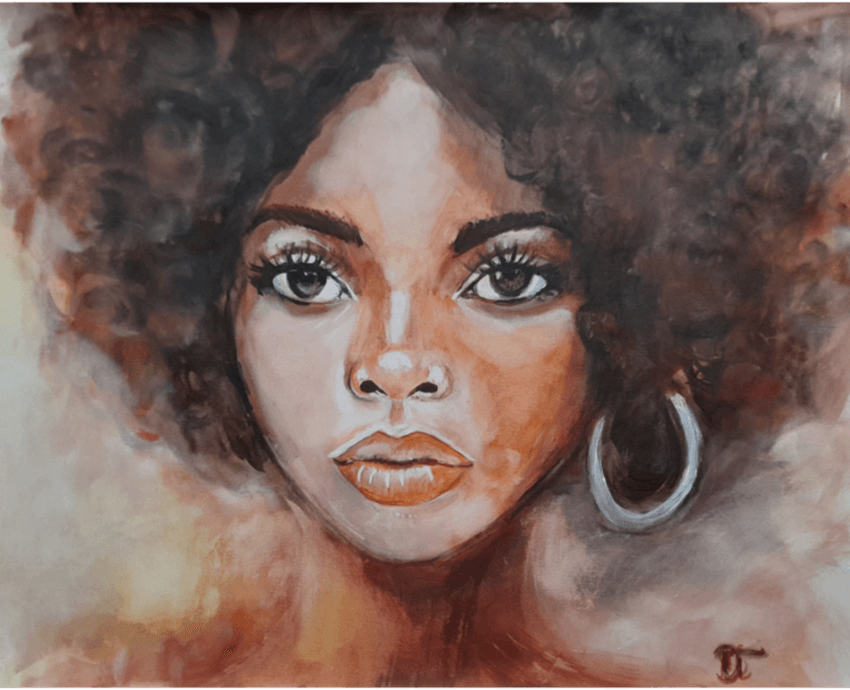
2023, acrylic on canvas, cotton
27.5″ x 35.5″
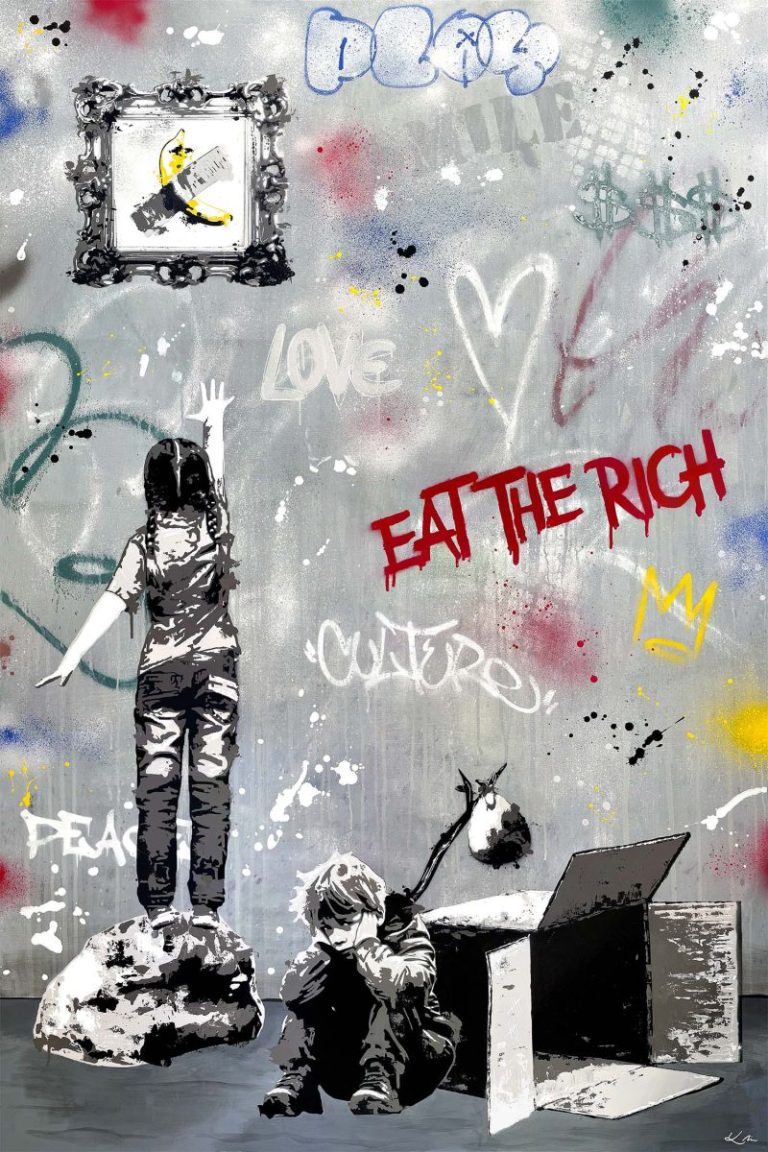
In the urban landscape of A New Gotham 2025, Krystal Madej uses a blend of graffiti and traditional techniques to address social justice. Her work serves as a source of empowerment and healing, proving that the modern feminist perspective is intrinsically linked to broader themes of environmental stewardship and human rights.

The Role of Professional Partnership
The journey from the “silence” of the past to the “spotlight” of the present is not one that artists should have to walk alone. The complexity of the modern art market requires a strategic engine that understands the nuances of these narratives.
At AGI Fine Art, we specialize in providing the curated context these powerful voices deserve. We ensure that the legacy of those who fought for visibility continues through professional representation in the world’s most prestigious art hubs.
Are you ready to add your voice to this history?
The next chapter of the art world is being written by those who dare to be seen.
Get the next article and open calls
A few times a year. Unsubscribe anytime.
Questions? Feedback? Thoughts on this article, or a topic you’d like us to cover?