What Curators Look For When Selecting Artists
Beyond talent: clarity, consistency, and readiness
One of the most common questions artists ask, often quietly, is:
What are curators really looking for?
Is it pure talent?
Originality?
Marketability?
Trend awareness?
The truth is more nuanced.
Curators are not just selecting individual artworks. They are selecting artists to enter into a dialogue, within exhibitions, fairs, and professional contexts. The decision goes far beyond whether a single piece is visually appealing.
Here are the key factors curators consistently consider when evaluating artists.
1. A Clear and Cohesive Body of Work
The first thing a curator looks for is consistency.

This doesn’t mean repetition. It means:
- a recognizable visual language,
- conceptual coherence,
- a sense of artistic direction.
A portfolio that feels scattered or experimental in unrelated ways can make placement difficult. Curators need to understand:
- What is this artist investigating?
- What connects these works?
- Where does this practice sit within a broader context?
Clarity builds confidence.
2. Professional Presentation
Presentation matters, more than many artists realize.
Small details influence perception:
- Are the works professionally photographed?
- Are the sides of canvases finished?
- Does the framing enhance or distract?
- Does the work feel substantial and exhibition-ready?
Artists often view their work inside the studio environment. Curators see it in the context of a white wall, proper lighting, and other artists’ work.
If a piece feels unfinished, it can affect the entire evaluation.
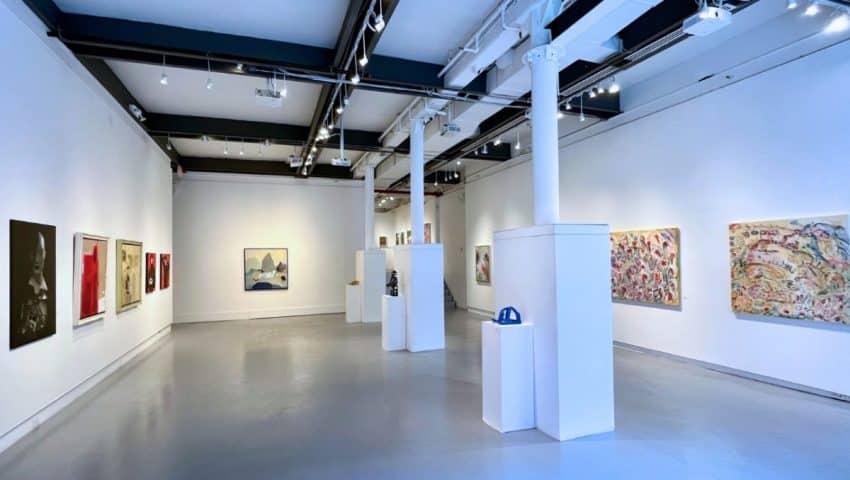
with finished canvases and curated framing.
3. Readiness for Public Exposure
Curators also evaluate mindset.
Exhibiting, especially at gallery or fair level, requires:
- reliability,
- commitment,
- the ability to provide additional work if needed.
If a piece receives interest, can the artist respond?
Is there more work available?
Is there consistency across the portfolio?
Readiness is not just aesthetic; it’s professional.
In this YouTube video, Sabrina Gilbertson, Director at Agora Gallery and AGI Fine Art, explains what makes an artist ready for a gallery exhibition:
4. A Strong Artist Statement
An artist statement doesn’t need to be academic or overly complex.
It needs to:
- articulate intention,
- clarify themes,
- support the visual work without overpowering it.
Curators are not looking for jargon. They are looking for alignment between concept and execution.
When the statement and the work reinforce each other, selection becomes easier.
5. Previous Public Engagement
While emerging artists are always considered, curators often look at:
- previous exhibitions,
- public response,
- signs of engagement.
This doesn’t mean you need an extensive resume. It means evidence that the work resonates beyond the studio.
Even small exhibitions can signal seriousness and momentum.
6. Contextual Fit
Selection is rarely about “good” versus “bad.”
Often, it is about fit.
Curators must consider:
- how works interact within a group show,
- thematic alignment,
- scale and spatial relationships,
- audience expectations.
An artwork can be strong and still not fit a specific exhibition.
Understanding this removes much of the mystery from rejection.
7. Authenticity Over Trend
Trends come and go.
Curators look for artists who:
- have a genuine voice,
- are not simply imitating popular styles,
- demonstrate sustained commitment to their practice.
Authenticity carries weight. It suggests longevity.
What Curators Are Not Looking For
They are not looking for:
- perfection,
- over-polished branding,
- viral popularity.
They are looking for seriousness, clarity, and professionalism.
Final Thoughts: Preparing for Selection
If you’re wondering whether your work meets curatorial standards, ask yourself:
- Is my portfolio cohesive?
- Is my presentation exhibition-ready?
- Can I sustain production?
- Does my statement reflect my work honestly?
Taking the time to refine these elements significantly strengthens your position.
Ready to Be Considered?
If you believe your work aligns with these curatorial expectations, we invite you to explore AGI’s current open calls.
Each opportunity is carefully curated with specific exhibition contexts in mind.
Review the guidelines, evaluate your readiness, and apply when your work feels aligned.
Explore our current open calls and take the next professional step.
Get the next article and open calls
A few times a year. Unsubscribe anytime.
Questions? Feedback? Thoughts on this article, or a topic you’d like us to cover?